Timber decay
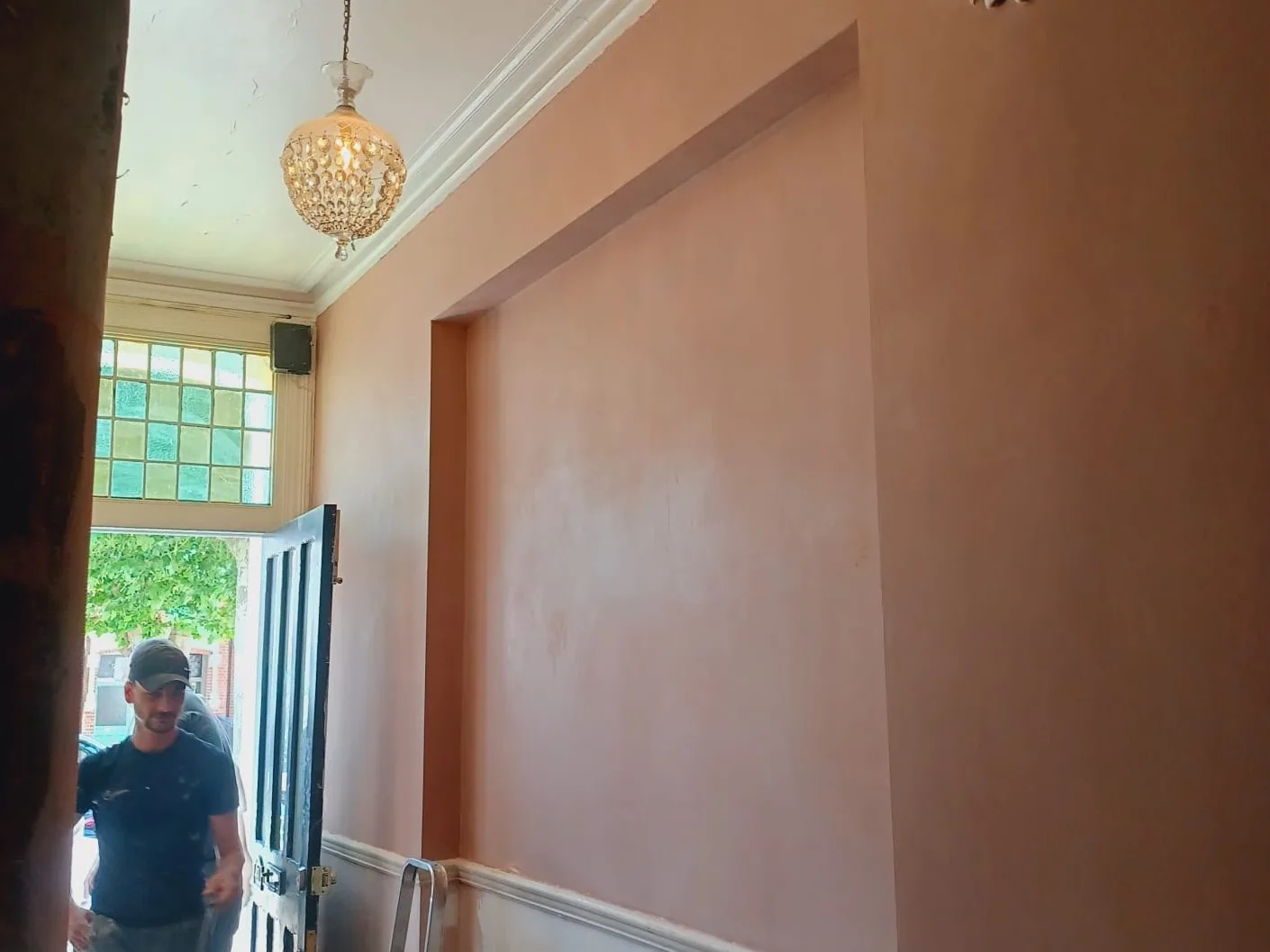
Skirtings, joist ends, floorboards and door linings in prolonged contact with damp masonry are at risk of wet rot, which turns a plaster repair into a joinery job.

Damp proofing & remedial treatment specialists
A failed damp proof course is diagnosed, treated with an accredited Sovereign or Wykamol system and replastered to a decoration-ready finish, priced as a fixed sum before any work starts, and guaranteed for ten years.
Free survey and diagnosis · 10-year workmanship guarantee · 10-year QANW insurance-backed guarantee
10 years
Company workmanship guarantee on damp treatment
10 years
QANW insurance-backed guarantee, independent of us
£0
Survey, diagnosis and written fixed-price quotation
£2m
Public liability insurance held
Service overview
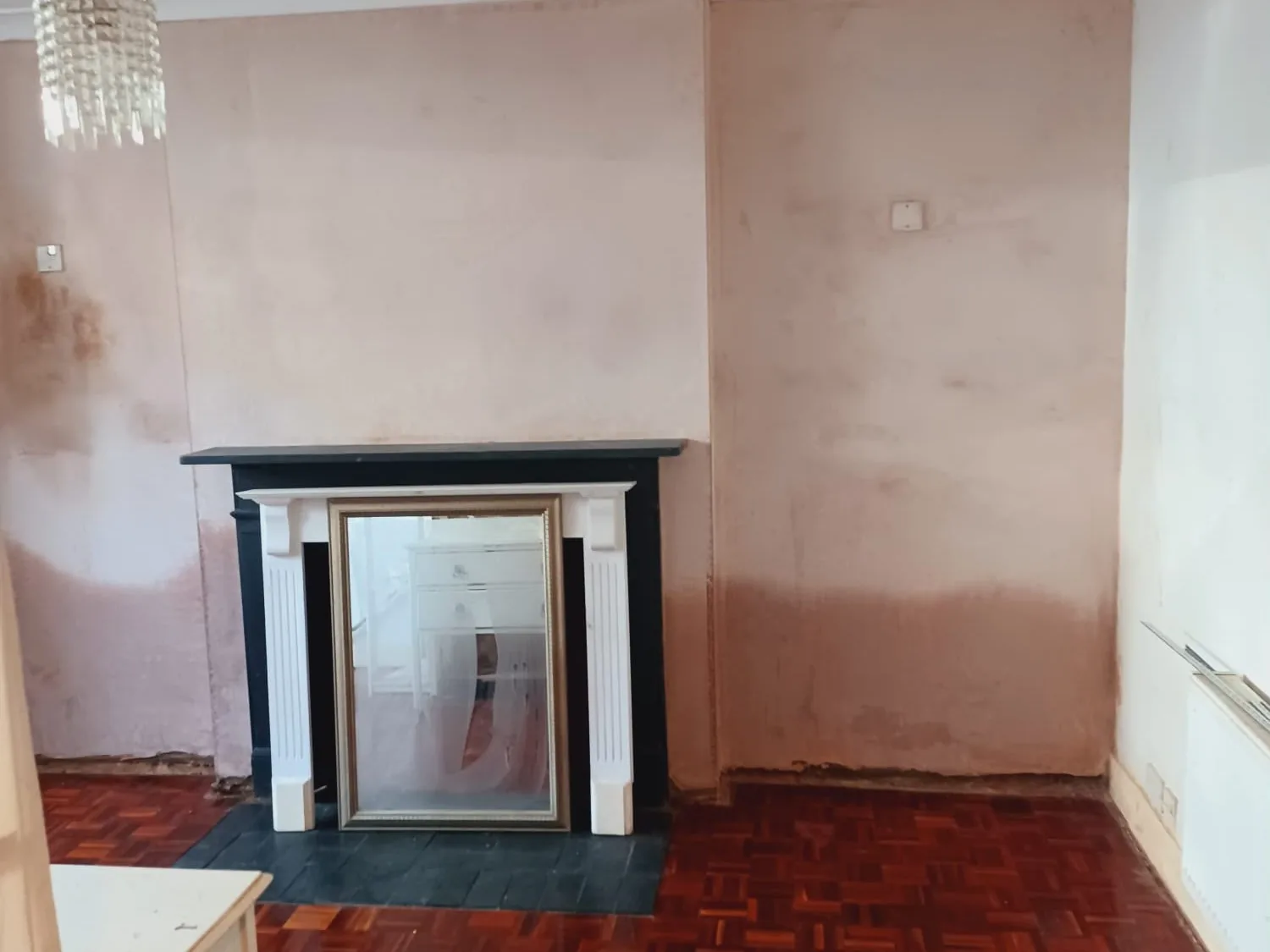
Rising damp is groundwater drawn upwards through masonry by capillary action because the damp proof course has failed, been bridged or was never installed. It shows as a tide mark roughly 300mm to 1.2m above floor level, blown or crumbling plaster, salting on the wall surface, peeling paint and skirtings that have started to rot from behind.
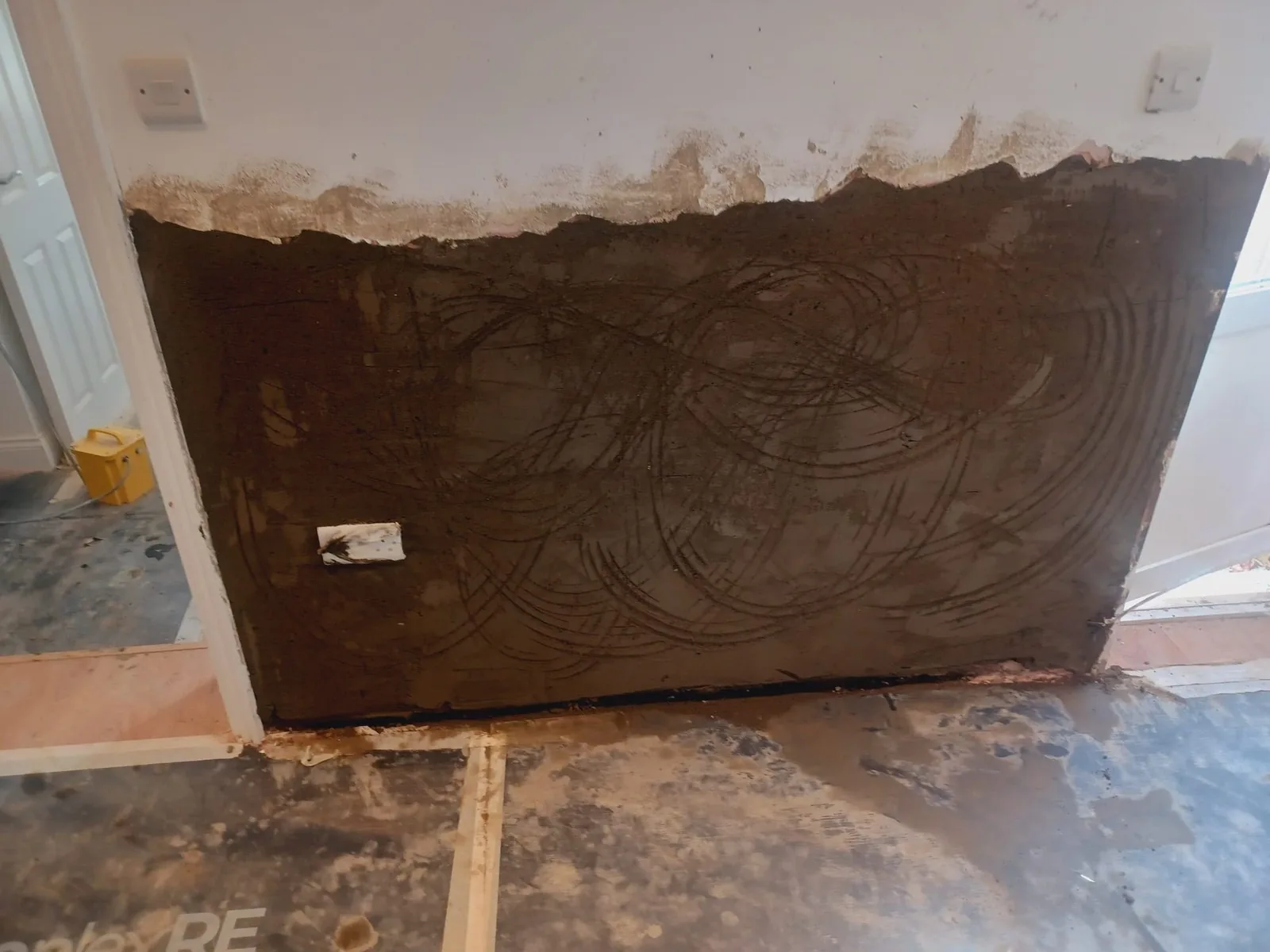
Treatment has two halves and both matter. First the moisture path is interrupted with a new chemical damp proof course injected into the mortar bed. Second, the contaminated plaster is removed and replaced with a salt-retardant replaster system, because hygroscopic salts left in old plaster keep pulling moisture from the air long after the wall itself has dried.
This service is for homeowners, landlords and buyers dealing with ground-floor walls in solid-wall Victorian and Edwardian terraces, older semis, converted flats and cottages, the housing stock that makes up most of London and Middlesex. It is also the work most often specified in a surveyor's report during a sale or remortgage.
Professional treatment matters because the diagnosis is where money is won or lost. Condensation and penetrating damp both produce similar staining, and neither is cured by injecting a damp proof course. The free survey establishes which one you actually have before anything is quoted.
Solid-walled ground floors with tide marks, salting or blown plaster; houses, flats, and properties where a surveyor has flagged damp.
When staining stops at a consistent height, returns after redecoration, or a mortgage valuation or homebuyer survey asks for specialist attention.
The damp proof course, the replaster specification and the guarantee documentation all have to be right. Accredited systems are only accredited when installed as the manufacturer specifies.
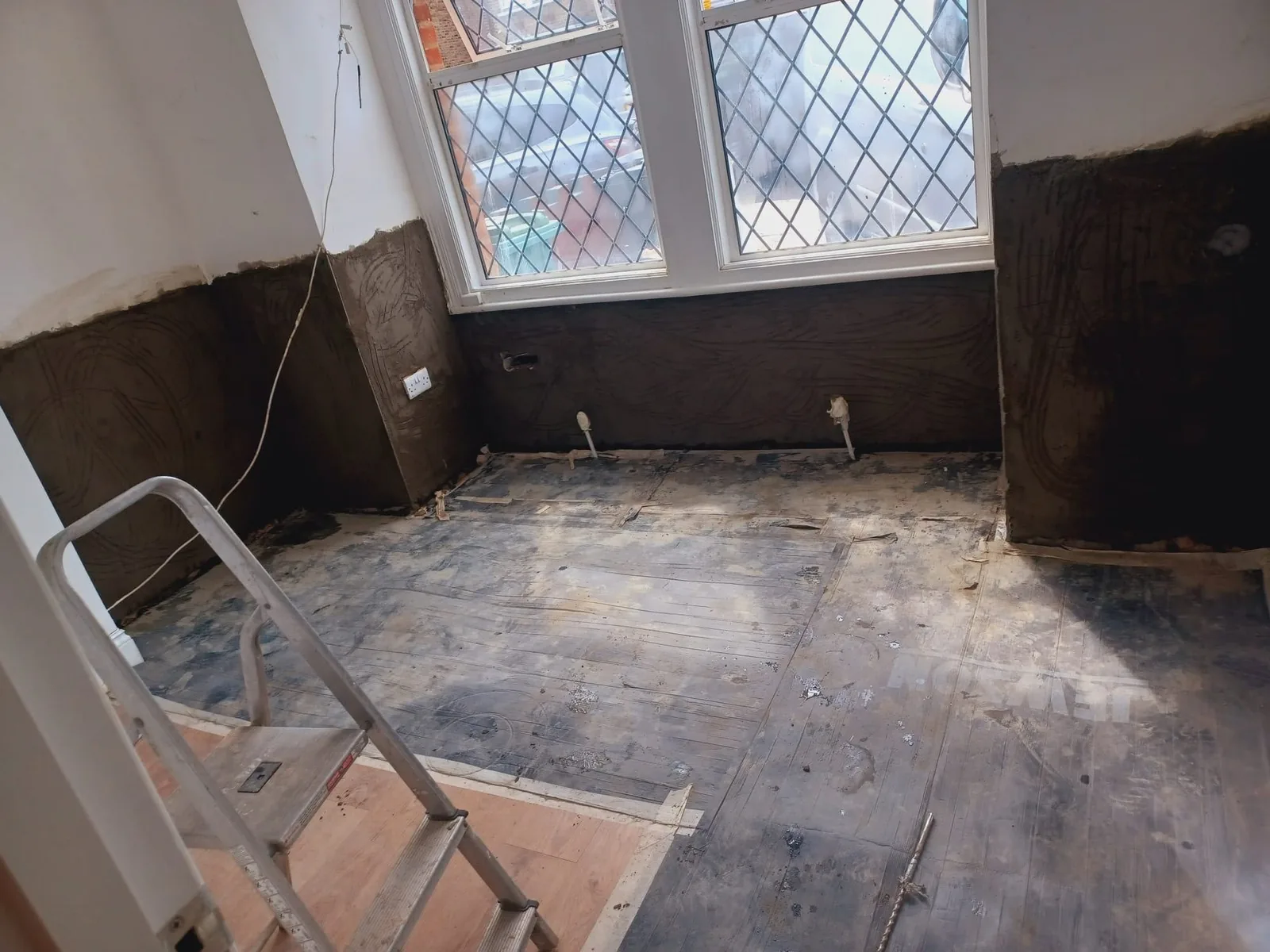
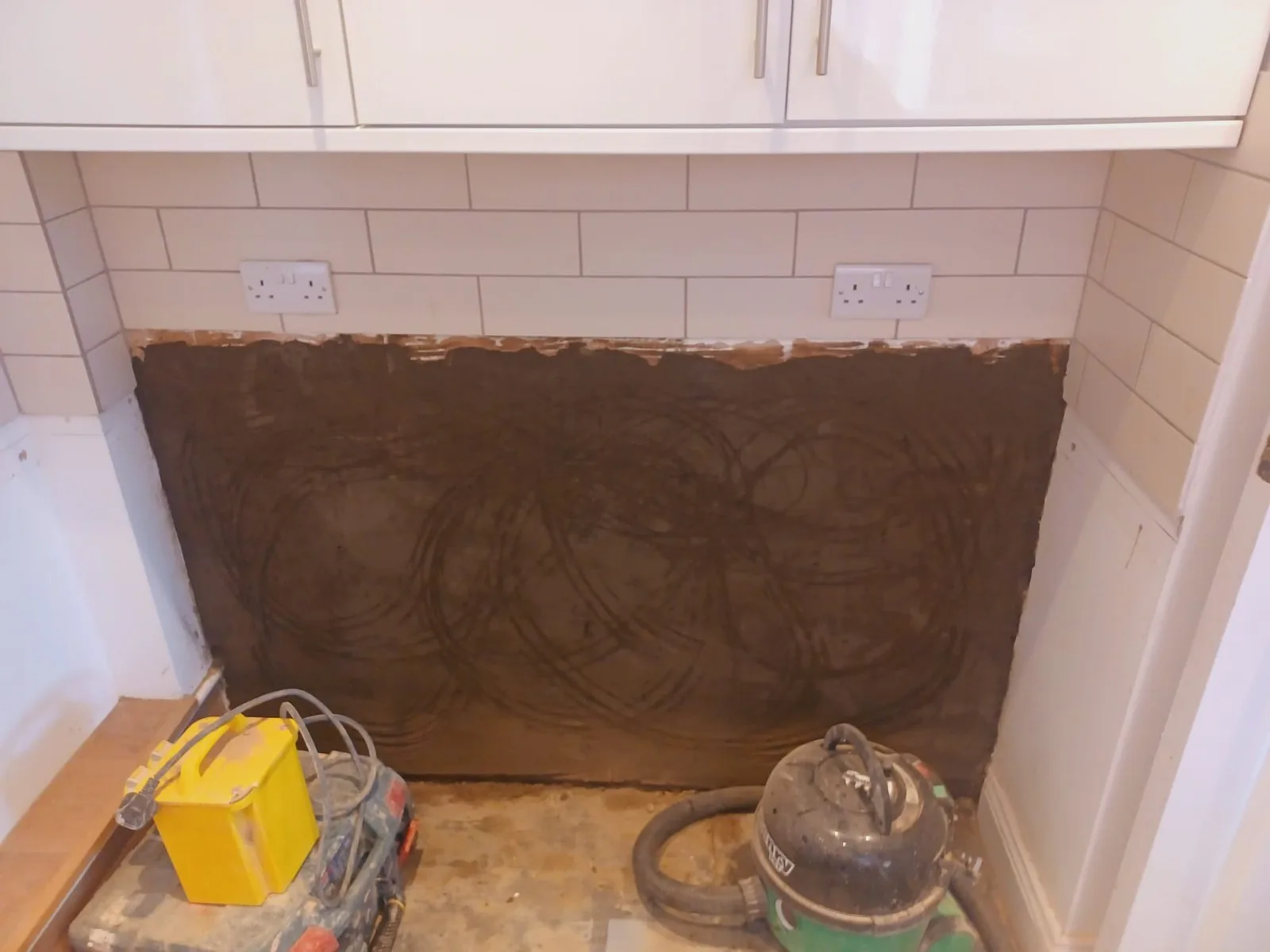
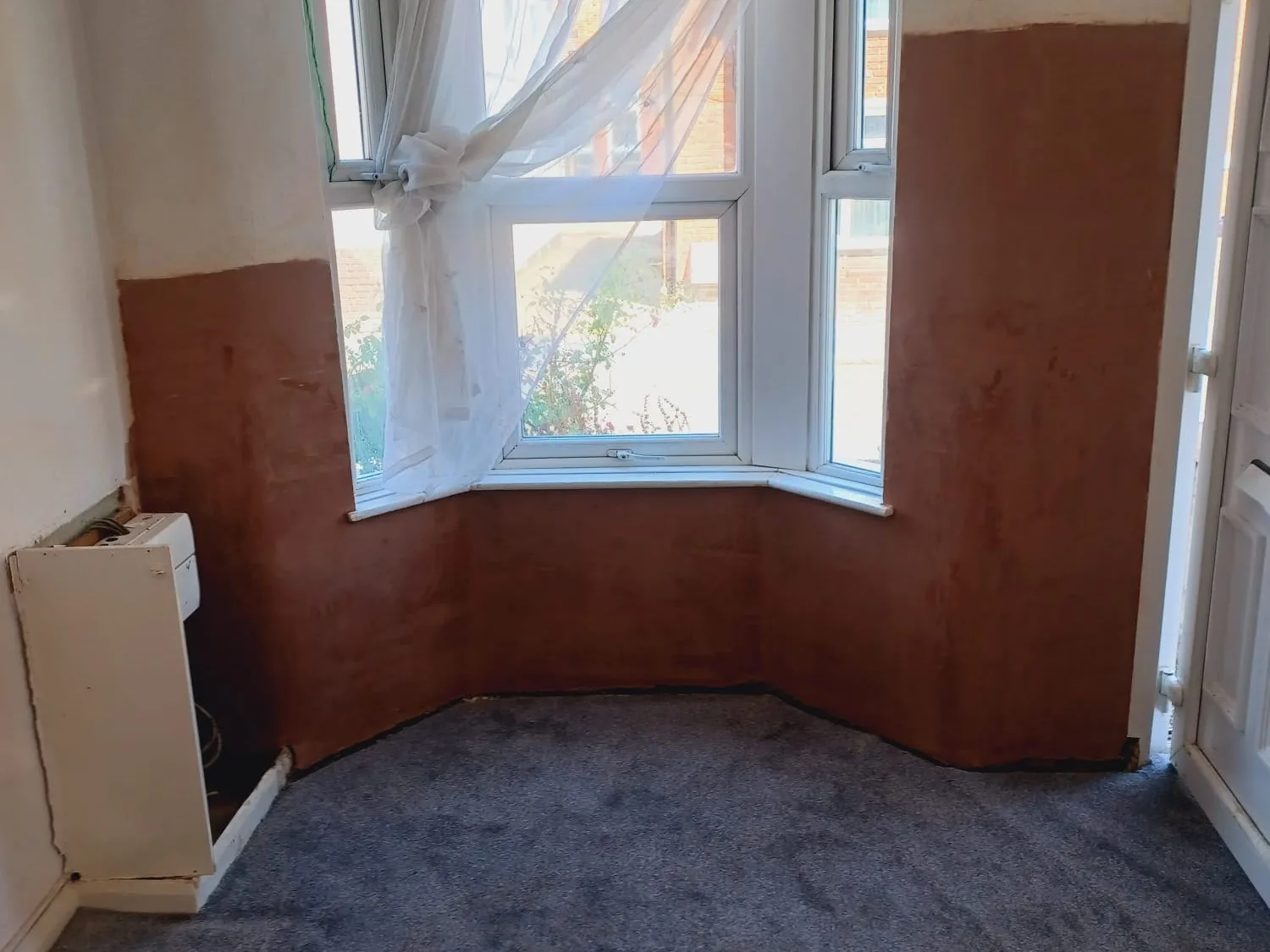
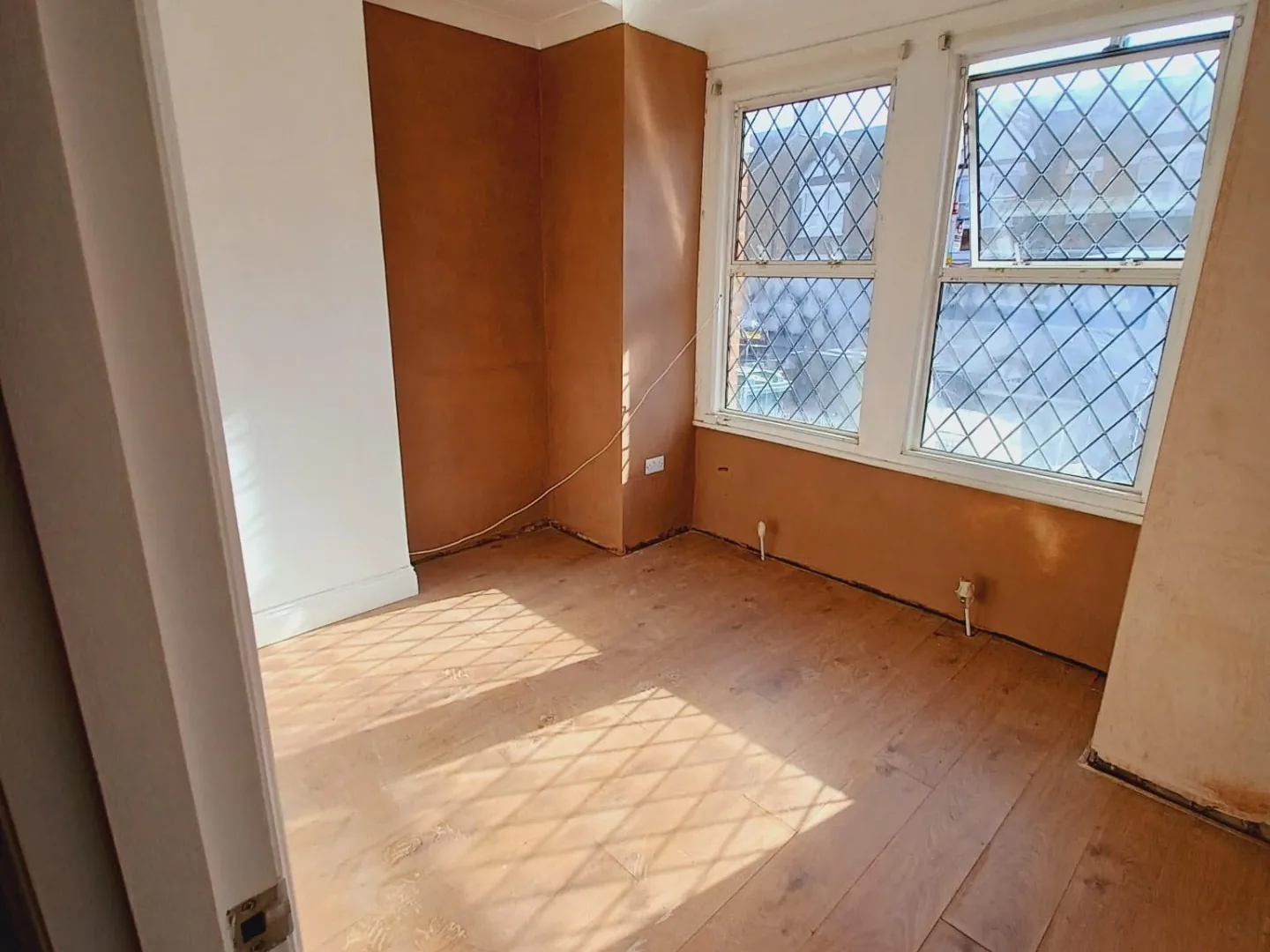
Our work
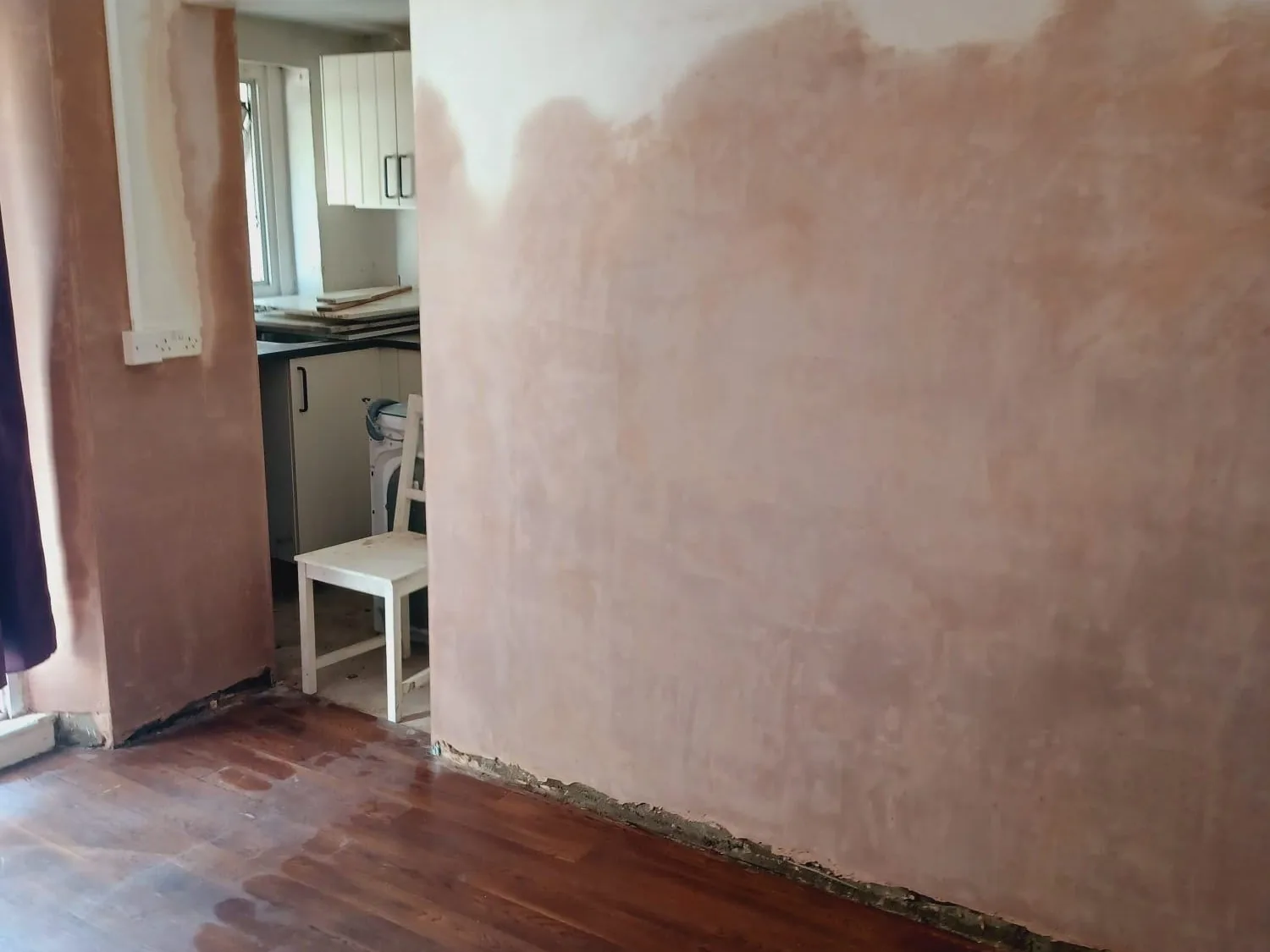
What happens if it is left
Untreated rising damp is progressive. Moisture keeps travelling, salts keep crystallising, and the damage moves from decoration to fabric. What starts as a patch you could cover with a picture ends as skirtings, floor timbers and plasterwork that all need replacing at the same time.
The costly version of this job is almost always the second attempt: plaster hacked off and redone twice, a previous injection that was never followed by a salt-retardant replaster, or a treatment carried out without diagnosing that the real problem was a bridged cavity or a raised external ground level.
Skirtings, joist ends, floorboards and door linings in prolonged contact with damp masonry are at risk of wet rot, which turns a plaster repair into a joinery job.
Salt-contaminated plaster stays hygroscopic. Redecorating over it blisters again within months, no matter how good the paint is.
Valuers and homebuyer surveyors flag rising damp readily. Without treatment and guarantee paperwork, buyers request retentions or withdraw.
Wet masonry conducts heat far faster than dry masonry, so damp walls cost more to heat and feel cold even in a warm room.
Persistent surface moisture and damp plaster support mould growth, which is a problem for asthma and allergy sufferers and a compliance issue for landlords.
Tanking slurry or waterproof paint applied to the inside face. It pushes moisture higher up the wall instead of stopping it, and hides the problem until it re-emerges above the treated band.
Our process
Free site visit. Moisture readings taken at height intervals, external ground levels, render and pointing checked, and the existing damp proof course located where it survives.
We confirm whether the pattern is genuinely rising damp, penetrating damp, condensation or a bridged DPC, and explain what the readings show in plain terms.
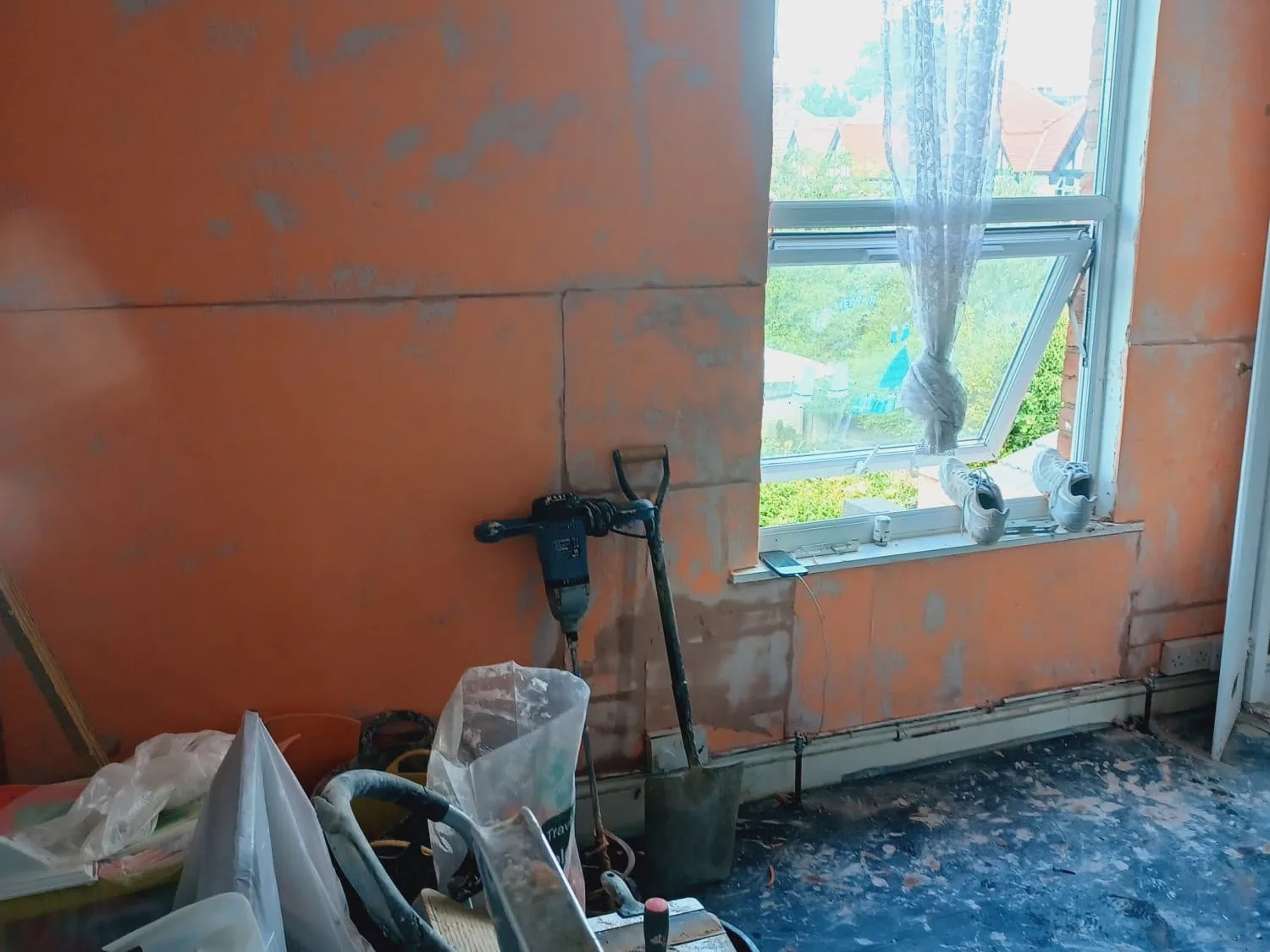
Contaminated plaster removed, a new chemical damp proof course injected into the mortar course with an accredited Sovereign or Wykamol system, and bridging defects corrected.
Salt-retardant render and plaster applied to the manufacturer's specification, walls checked for continuity of treatment, and the area left clean and ready for decoration.
Final balance due on completion, then your 10-year company workmanship guarantee and 10-year QANW insurance-backed guarantee documentation is issued.
What you get
The moisture path is interrupted and the contaminated plaster is removed, so the wall stops re-wetting instead of being redecorated every spring.
A 10-year company workmanship guarantee plus a separate 10-year QANW insurance-backed guarantee, so cover survives independently of us.
Guarantee documentation homeowners, buyers, surveyors and mortgage lenders accept when a report has asked for specialist damp treatment.
You approve a written fixed sum for a defined scope. No day rates, no running meter, no surprise on the final invoice.
Approved contractor for Sovereign and Wykamol. Their accredited products and systems are what the guarantees are built on.
Replastering is part of the job, not a separate trade you have to chase afterwards, so the room goes back into use.
In detail
Rising damp treatment is a specification job. The right product, the right mortar course, the right render mix and the right drying time are what turn an injection into a repair that holds for decades.
The standard remedial approach is a chemical damp proof course: a water-repellent silane/siloxane formulation introduced into the mortar bed so it lines the capillaries in the masonry and stops water climbing. Cream formulations are injected into drilled holes at set centres along a single mortar course and are the usual choice on solid brick, because the cream stays where it is put rather than running into voids.
We install Sovereign and Wykamol systems as an approved contractor, which means holes at the spacing and depth the manufacturer specifies, in the correct course, and product used at the stated coverage rate. Where a wall is rubble-filled, very wet, or built in stone with wide irregular joints, the specification changes, sometimes to a higher-volume injection, sometimes to a different approach entirely.
Once a wall has been wet for years it holds chlorides and nitrates brought up from the ground. Those salts are hygroscopic: they attract moisture out of room air, so plaster containing them stays damp even after the masonry below has dried. That is why old plaster is removed, normally to around a metre above the last visible sign, and a salt-retardant render system is applied in its place.
The usual build-up is a sand and cement render with a waterproofing additive and salt inhibitor, then a skim finish. Alternatives include renovating plasters and dry-lining on a membrane where a wall must not be wet-plastered or where the room needs to come back into use faster. Freshly treated walls need drying time before they are fully decorated, and we tell you how long before you order paint.
A perfectly good damp proof course can be defeated by something bridging it. Raised patios, new paths, flower beds and gravel piled above DPC level all give water a route around the barrier. So do render coats carried down over the DPC, rubble left in a cavity, and internal solid floors poured above the wall's damp proof course level.
The survey looks for these because correcting them is often cheaper and more effective than any injection. Lowering ground levels, cutting back render, forming a clear margin or installing a drainage channel can resolve damp that had been diagnosed elsewhere as a failed DPC.
Victorian and Edwardian solid-brick terraces are the most common case: nine-inch walls, a slate or bitumen DPC that has broken down, and the damage concentrated on party and front elevations. Interwar cavity-walled houses more often suffer bridging or debris in the cavity than a wholesale DPC failure. Stone cottages and rubble-filled walls need a different injection strategy because the wall is not a uniform absorbent block.
Flats and maisonettes at ground level are treated the same way, though access, shared walls and lease conditions shape the sequence. Commercial ground floors: shops, offices, workshops; add trading hours and stock protection to the plan, but the technical work is unchanged.
There are no published prices for this work because no two walls are the same. Length of wall, wall thickness, height of replastering, plaster type, access, joinery removal and any bridging corrections all change the scope. The free survey exists so the quotation matches the property rather than an average.
Every job is quoted as a fixed price, never a day rate. Payment is 50% deposit and 50% on completion, by bank transfer. You know the total before anything is drilled.
Carried out across Harrow, Wembley, Pinner, Stanmore, Edgware, Ealing, London, Middlesex, Watford, Buckinghamshire, Slough, Brent, Surrey, High Wycombe, West London, see the full list of areas covered.
Questions
It depends on the length and thickness of the affected walls, how much replastering is needed and whether any bridging has to be corrected, so we quote a fixed price after a free survey rather than publish a figure that would not apply to your property. The survey, diagnosis and written quotation cost nothing and carry no obligation.
Most single-room and single-elevation jobs are a matter of a few days on site: strip out, injection, render and skim. Larger properties or several elevations take longer, and the programme is confirmed in your quotation before you commit.
Newly applied plaster and render need to dry before final decoration. We tell you the expected timescale for your specific build-up on completion, and a breathable mist coat is usually recommended first.
Yes. Damp treatment carries a 10-year workmanship guarantee from us and a separate 10-year QANW insurance-backed guarantee, so cover remains in place independently. Building work carries a 6-month workmanship guarantee.
A correctly installed chemical damp proof course in accredited materials is a long-term repair, which is why it is backed by a ten-year guarantee. Its working life depends on the wall staying free of bridging, which is why external ground levels and render are addressed as part of the job.
Usually not. The work is dusty and noisy in the rooms affected, so furniture is moved and areas are sheeted, but most customers stay in the property throughout.
We take calls Monday to Friday 8am to 8pm and Saturday 8am to 1pm, and we prioritise surveys where a sale, remortgage or tenancy is waiting on the report. Call and tell us the deadline you are working to.
That is exactly what the survey is for. Height and pattern of staining, moisture readings, salting, ventilation, external ground levels and the state of pointing and render are all assessed before anything is specified. If it turns out to be condensation or penetrating damp, we tell you.
We work across London, Middlesex, Watford, Buckinghamshire, Slough, Brent, Surrey, High Wycombe and West London. If you are nearby and not on that list, call and ask.
Yes, and it is common. Failed treatments usually mean the wrong cause was treated, the replaster was omitted, or bridging was never corrected. We survey it as a fresh case and tell you what was missed.
Free survey
Send us what you are seeing; the height of the tide mark, whether plaster is blowing, and when it started. We will arrange a free survey, confirm the cause and put a written fixed price in front of you.
Related services
Find out exactly what is causing the damp, what it takes to fix it, and what it costs, in writing, at a fixed price, with no charge for the visit and no obligation to proceed.
Damp surveys & diagnosis in London & MiddlesexThe replaster is half of any damp repair. We remove contaminated plaster, apply the specified salt-retardant system and leave a flat, decoration-ready finish, as part of a fixed price, by the same contractor that treated the wall.
Plastering in London & MiddlesexDamp that worsens after rain is coming in from somewhere. We find the route: pointing, render, sills, gutters or roof detail; correct it, then repair the wall inside. Free survey, fixed price, no guesswork.
Penetrating damp treatment in London & Middlesex