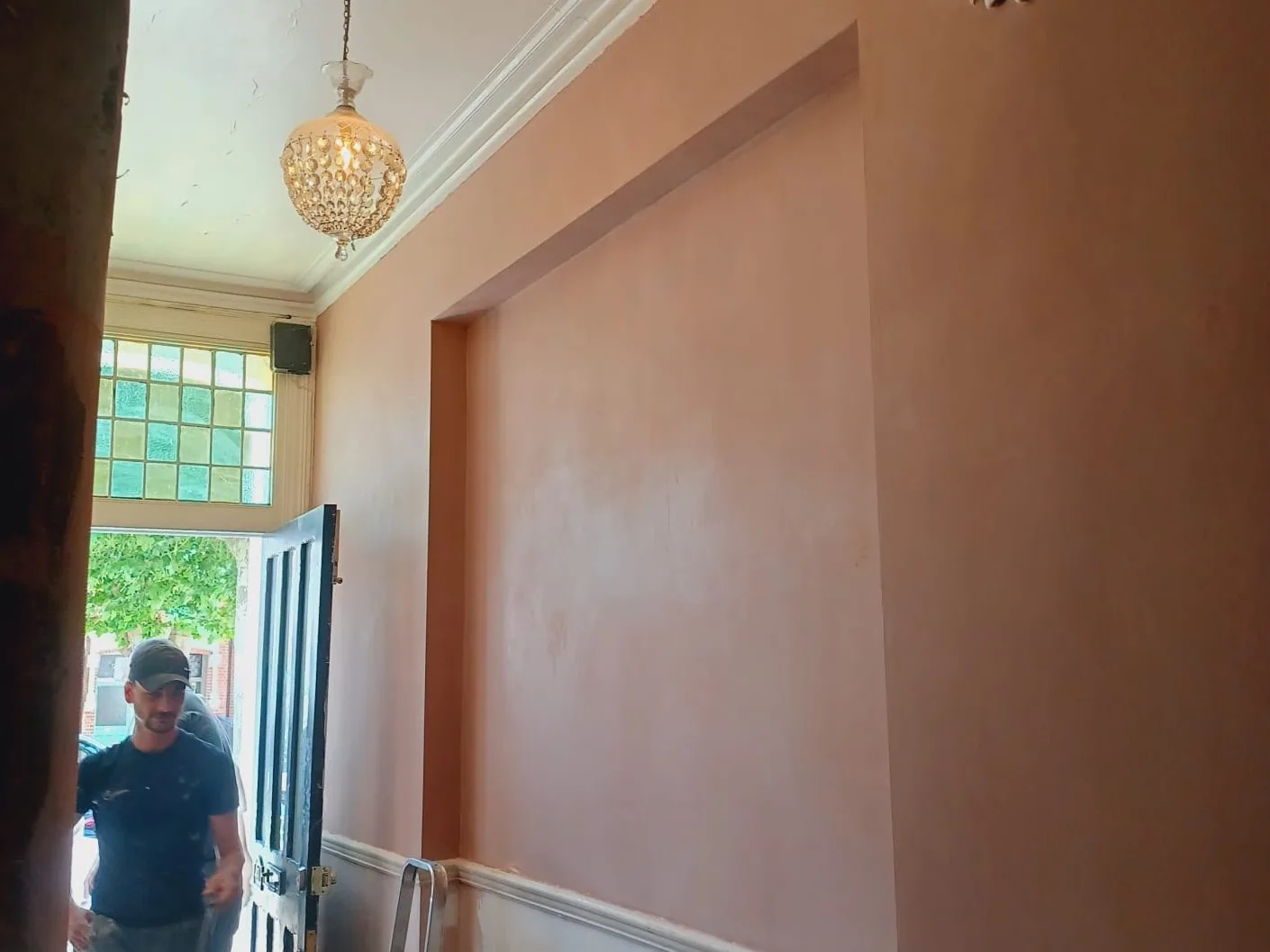
Water ingress
Open cracks let driven rain straight into the wall, producing internal damp patches along the crack line.

Damp proofing & remedial treatment specialists
Helical stainless bars bonded into the bed joints tie cracked brickwork back into one structure, a repair carried out from the outside, without rebuilding the wall, and finished so the crack disappears.
Free survey and diagnosis · Fixed-price quotation · Cause assessed before the crack is repaired
£0
Survey, diagnosis and written quotation
Fixed price
Per job, never a day rate
6 months
Workmanship guarantee on building works
£2m
Public liability insurance held
Service overview
Brick stitching, or helical bar reinforcement, repairs cracked masonry by bonding stainless steel helical bars into the horizontal mortar beds across the line of the crack. The bars are set in a high-strength grout or resin, the joint is repointed, and the wall is left tied back together and able to distribute load across the crack rather than opening further along it.
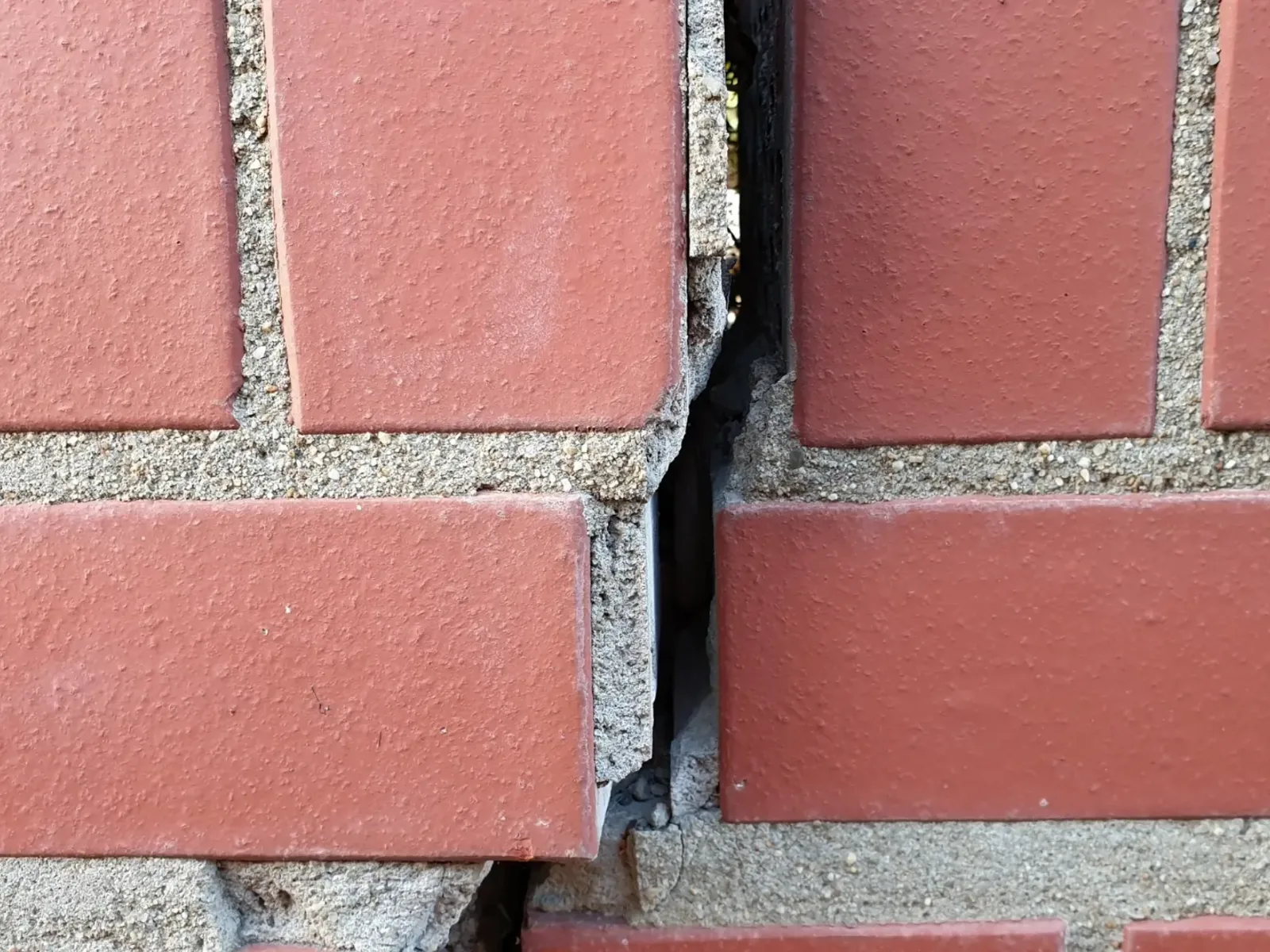
It is used on stepped or diagonal cracking in brickwork, cracks at the corners of window and door openings, cracked and separating gable walls, bay window cracking, boundary and garden wall cracks, and around lintels where movement has opened the joints above an opening.
The critical point is that stitching treats the crack, not the reason for it. Before we specify it we establish what is moving, thermal movement, corroding embedded steel or wall ties, a failed or overloaded lintel, or ground movement, because a stabilised crack in a wall that is still moving will crack again nearby.
It needs a specialist because the bar spacing, embedment depth, bar length either side of the crack and the grout specification are all engineered numbers, and because it is often carried out alongside brick replacement and repointing to leave the wall both sound and weathertight.
Owners of brick properties with stepped, diagonal or vertical cracking, cracks above openings, or separating gable and boundary walls.
When cracks are wide enough to admit water, are lengthening, or are opening at the corners of openings and along bed joints.
Bar spacing, embedment and grouting are specification-driven, and the cause of movement must be identified first.
What happens if it is left
An open crack in an external wall does two things at once. It admits water directly into the masonry, which then reaches embedded timbers, wall ties and steel, and if corroding steel or ties caused the crack in the first place, that water accelerates the very process that opened it. The failure feeds itself.
The common mistake is filling. Mastic, mortar or filler pushed into a crack hides it for a season and provides no structural continuity whatsoever. The crack reopens through the filler, and the movement has meanwhile carried on unrecorded.
Open cracks let driven rain straight into the wall, producing internal damp patches along the crack line.
Water reaching wall ties, lintels and embedded steel drives rust expansion, which opens the crack further.
Water sitting in the crack freezes and expands, breaking the arrises off bricks and widening the gap each winter.
Unrestrained cracking extends and branches, turning a stitching job into partial rebuilding.
Visible external cracking is one of the fastest ways to worry a valuer or buyer. Documented, completed repair work answers the question.
Filling or painting over the crack. There is no structural connection, no diagnosis, and the crack returns through the repair.
Our process
Free survey of the crack: pattern, width, direction, whether it is stepped or vertical, its relationship to openings, ties, lintels and ground levels.
We assess the likely cause; thermal movement, corroding embedded steel or ties, lintel failure, or ground movement, and say plainly if a structural engineer's input is warranted.
Bed joints cut out at specified centres, helical stainless bars bedded in high-strength grout across the crack with the correct embedment either side.
Cracked and spalled bricks replaced where needed, the crack line and joints repointed to match, and the elevation checked so the repair is weathertight as well as sound.
Site cleared, balance on completion, 6-month workmanship guarantee on the building work, plus the 10-year damp guarantees on any damp treatment included.
What you get
The wall is tied back into one element, so load transfers across the crack instead of concentrating at it.
Stitching is carried out through the bed joints from outside, which avoids the cost, disruption and match problems of taking a wall down.
The crack line is properly repointed as part of the repair, closing the route that was feeding damp and corrosion.
We identify what is moving before we specify the repair, and tell you when an engineer should be involved.
Bars are hidden in the bed joints and the pointing is matched, so a completed repair is close to invisible.
Bar quantity, area, access and making good are set out and priced as a fixed sum before work begins.
In detail
Stitching is a small-scale structural repair, and like all structural repairs it is only as good as its specification.
The bars are austenitic stainless steel with a helical twist, which gives an enormous surface area for bond and allows the bar to flex slightly rather than acting as a rigid pin. Stainless is not optional: a carbon steel bar buried in a wall that admits water is a future crack of its own.
The bars are bedded in a cementitious high-strength grout or a resin-based system, applied so the bar is fully encapsulated with cover front and back. Bars are typically installed in every fourth to sixth bed joint depending on the wall, the crack and the loading, and extend a specified distance beyond the crack on both sides so the load has somewhere to go.
Diagonal and stepped cracking that follows the bed and perp joints usually indicates differential movement. Vertical cracking at a corner or at regular intervals along a long elevation often points to thermal movement and a lack of movement joints. Horizontal cracking at regular courses is a classic sign of wall tie corrosion, because rusting ties jack the courses apart.
Cracks radiating from the corners of windows and doors indicate stress concentration at the opening, sometimes with a failing or inadequate lintel. Widening towards the top suggests rotation; widening towards the bottom suggests settlement below. Each pattern leads to a different repair specification.
Stitching is regularly combined with other work: replacing spalled bricks along the crack, remedial wall tie installation where ties have corroded, lintel repair or the installation of a stitched brick beam over an opening, and repointing the wider elevation where joints have eroded.
Where damp has entered along the crack, internal plaster may need removing and rebuilding, and as damp specialists we handle that under the same fixed price rather than leaving you to arrange it.
Stitching addresses cracked masonry. It does not address a foundation that is moving, subsidence from trees or drains, or a genuine structural inadequacy. Where the evidence points that way, progressive movement, door and window frames going out of square, cracks widening over months, or damage on multiple elevations, the right answer is monitoring and a structural engineer's assessment, and we will say so.
Being told a repair is not yet the right step is more valuable than being sold one. Where an engineer specifies stitching as part of their scheme, we install it to that specification.
Domestic applications include house elevations, gables, bay windows, chimney breasts, porches, garden and boundary walls. Commercial applications include frontages, warehouse and industrial masonry, and long elevations lacking adequate movement joints.
In all cases work is quoted as a fixed price after a free survey, paid 50% deposit and 50% on completion by bank transfer, with a 6-month workmanship guarantee on the building work.
Carried out across Harrow, Wembley, Pinner, Stanmore, Edgware, Ealing, London, Middlesex, Watford, Buckinghamshire, Slough, Brent, Surrey, High Wycombe, West London, see the full list of areas covered.
Questions
It depends on the length of the crack, how many bars are specified, access, and how much brick replacement and repointing goes with it. The survey and written fixed-price quotation are free.
Most single cracks are completed in a day or two including making good. Multiple cracks, several elevations or high-level access take longer, and the programme is in your quotation.
The bars sit inside the bed joints and are covered by repointing matched to the existing work, so a finished stitch is discreet. Newly pointed joints look fresh at first and weather in.
Building works including stitching carry a 6-month workmanship guarantee. Any damp treatment carried out alongside carries the 10-year workmanship guarantee and the 10-year QANW insurance-backed guarantee.
Stainless helical bars correctly grouted into sound masonry are a permanent repair. What determines longevity is whether the movement causing the crack has been dealt with.
No. Stitching repairs cracked masonry; it does not stabilise moving ground. If the evidence points to subsidence we will tell you and recommend monitoring and a structural engineer rather than selling you a repair that will not hold.
Not for most straightforward thermal or tie-related cracking. Where movement looks progressive or affects several elevations, an engineer's assessment is the right first step and we will say so at survey.
Yes, in almost all cases. The bars are installed through the external bed joints, so there is no need to open up rooms inside.
If you suspect subsidence or an insured event, speak to your insurer before commissioning repairs. For thermal movement and tie-related cracking, it is normally straightforward maintenance.
London, Middlesex, Watford, Buckinghamshire, Slough, Brent, Surrey, High Wycombe and West London.
Free survey
Send a photo with something for scale and tell us how long it has been there and whether it is growing. The survey is free, the diagnosis is honest, and the quotation is a fixed price.
Related services
Open joints and spalled brick faces are the most common route for penetrating damp. We cut out properly, repoint in a mortar matched to your brick, and replace masonry that has broken down.
Brickworks & repointing in London & MiddlesexDamp that worsens after rain is coming in from somewhere. We find the route: pointing, render, sills, gutters or roof detail; correct it, then repair the wall inside. Free survey, fixed price, no guesswork.
Penetrating damp treatment in London & MiddlesexDamp repairs rarely stop at the damp. We carry out the associated building work: masonry, render, plaster, joinery repairs and making good, so the job finishes with one contractor accountable for all of it.
General building in London & Middlesex