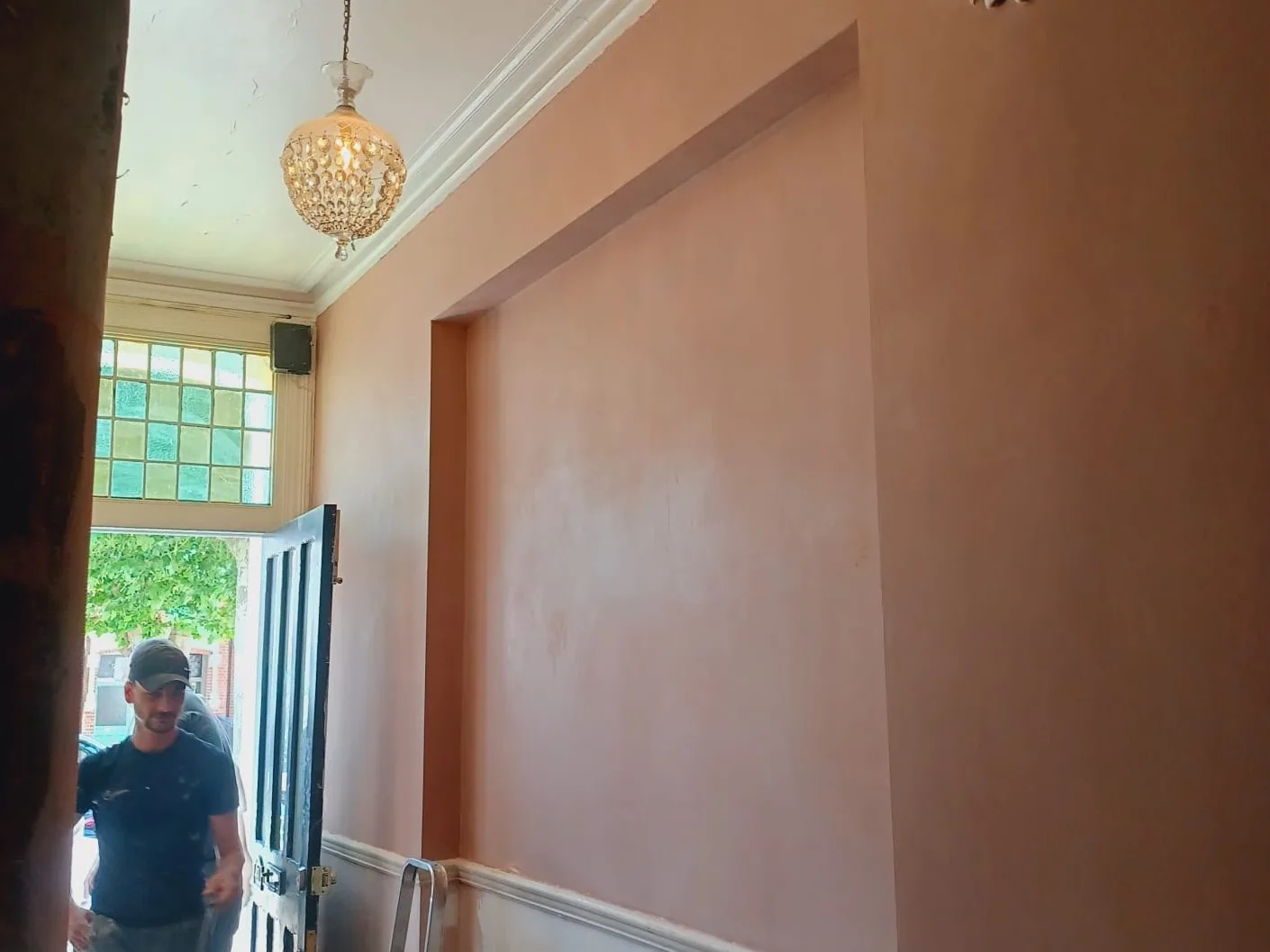
Penetrating damp inside
Open joints are a direct path for driven rain, producing patchy internal damp that follows the weather.

Damp proofing & remedial treatment specialists
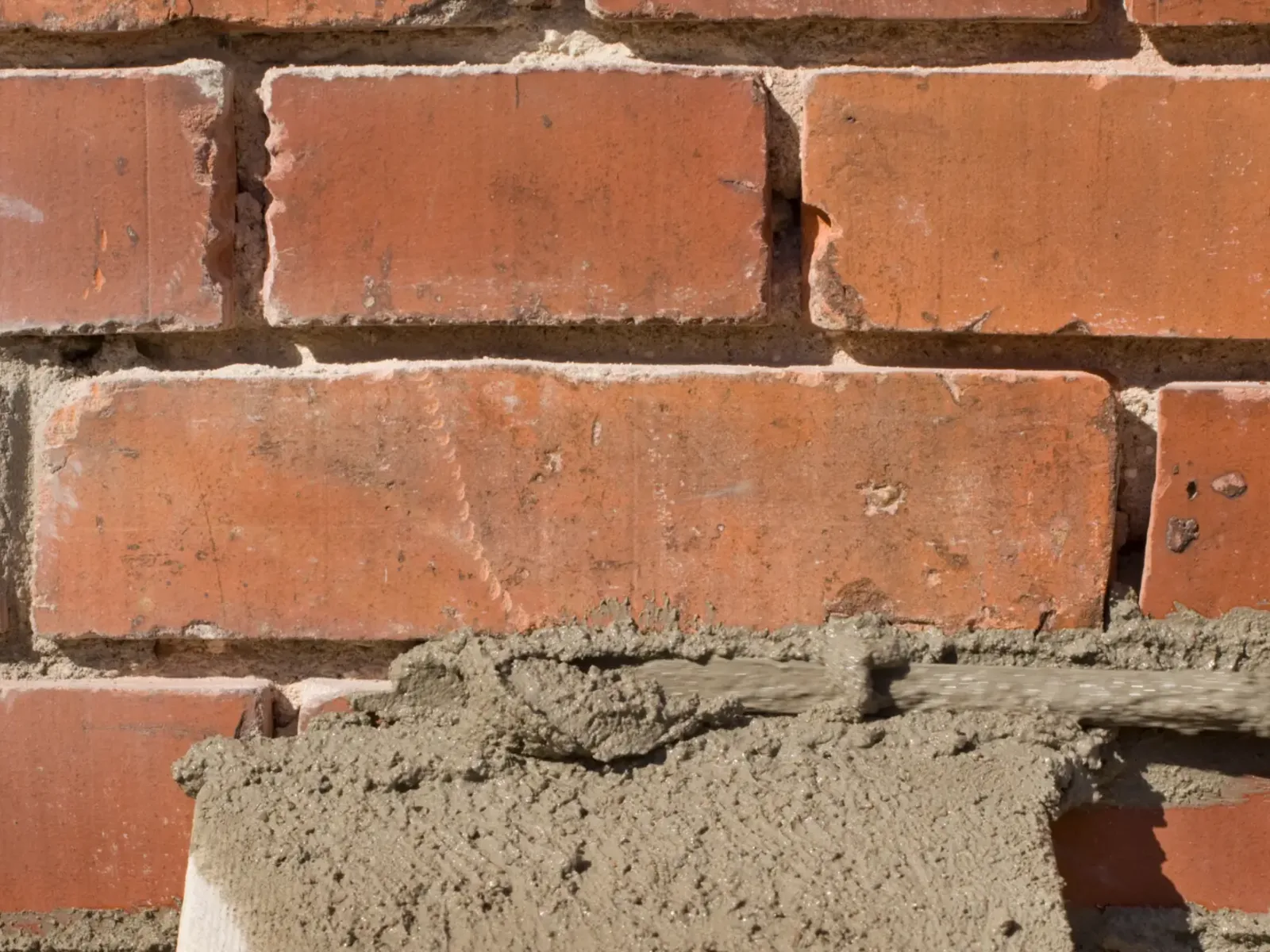
Open joints and spalled brick faces are the most common route for penetrating damp. We cut out properly, repoint in a mortar matched to your brick, and replace masonry that has broken down.
Free survey and fixed-price quotation · Damp specialists handling cause and effect together
£0
Survey and written fixed-price quotation
Fixed price
Per job, never a day rate
6 months
Workmanship guarantee on building works
£2m
Public liability insurance held
Service overview
Mortar is the sacrificial element in a brick wall. It is meant to be softer than the brick so that movement and moisture are taken by the joint rather than the brick face. Over decades on an exposed elevation the joints erode, recess and open up, and once they do, driven rain sits in them and tracks inwards, which is why so much internal penetrating damp turns out to be a pointing problem.
Our brickwork service covers repointing eroded or defective joints, replacing spalled and frost-damaged bricks, rebuilding sections of masonry that have broken down, repairing cracks, resetting loose copings and rebuilding chimney and parapet brickwork where it is letting water in.
This is for owners of solid-wall and cavity-walled brick properties with eroded joints, crumbling brick faces, damp patches on exposed elevations, or previous repointing carried out in a cement mix that is now causing damage.
It needs a damp-aware contractor because the mortar specification has consequences. Hard cement pointing on soft stock brick forces moisture to leave through the brick face, and the faces then blow, a repair that actively destroys the wall it was meant to protect.
Brick properties with recessed, cracked or missing mortar, spalled brick faces, or internal damp on an exposed elevation.
When joints can be raked out with a finger or key, when brick faces are flaking, or when damp inside worsens after driven rain.
Mortar mix, cut-out depth and joint profile decide whether the wall sheds water or is damaged further.
What happens if it is left
Once mortar has recessed, water gets a foothold. It saturates the joint, freezes, and breaks the arris off bricks; it reaches embedded timbers and rots them; it reaches wall ties and fixings and corrodes them, and corroding steel expands and cracks the masonry around it, opening further routes in.
The two expensive mistakes are a hard cement mix on soft brick, which shifts the damage from the joint to the brick face, and 'skim pointing', smearing new mortar over old without cutting out. Skim pointing has no depth, no key and no life; it falls out within a few winters and leaves the joint worse than before.
Open joints are a direct path for driven rain, producing patchy internal damp that follows the weather.
Saturated masonry spalls in freeze-thaw cycles, so a repointing job turns into brick replacement.
Water reaching wall ties, lintels and embedded steel causes rust expansion, which cracks joints and brickwork.
Timber lintels, bearings and joist ends in a persistently wet wall develop wet rot, structural work rather than repair.
Extensive mortar loss reduces bed contact and, in exposed positions such as parapets and chimneys, becomes a stability issue.
Cement-rich pointing over soft Victorian brick, or skim pointing over old joints. Both fail, and the second fails fast.
Our process
Free survey of the elevation: joint depth and condition, brick type and hardness, spalled faces, cracking, copings and parapets, and the internal damp pattern it is producing.
We specify the mortar mix, cut-out depth, joint profile and which bricks need replacing, plus any stitching or structural repair required.
Defective mortar cut out to proper depth mechanically or by hand, joints cleaned and dampened as needed, and damaged bricks cut out ready for replacement.
Joints filled and finished to the specified profile, replacement bricks bedded and matched, work protected while curing, then the elevation checked for missed joints.
Site cleared and made good, balance due on completion, with a 6-month workmanship guarantee on building works.
What you get
Correctly cut and filled joints shed rain instead of holding it, which is what stops the damp patch inside.
A mix appropriate to the brick's hardness protects the faces instead of sacrificing them, so the wall is not damaged by its own repair.
Repointing before frost takes the brick faces avoids the far larger job of cutting out and replacing masonry.
As damp specialists we correct the external defect and make good inside, under one fixed price.
Joint profile and colour matched across the elevation, so a repair reads as brickwork rather than as a patch.
Scaffolding or access equipment is allowed for in the fixed quotation, including chimney and parapet-level work.
In detail
Brickwork repair decisions come down to the brick, the exposure and the existing mortar. Getting those three right is what makes the repair last.
The principle is simple: the mortar should be no harder than the brick. Soft London stock brick, common across Victorian terraces, needs a lime-based or lime-rich mix that flexes slightly and lets moisture escape through the joint. Harder engineering and modern bricks tolerate a cement-based mix.
Colour and aggregate are matched as closely as practical to the existing work, because pointing is a large proportion of what you see on a brick elevation. Where previous cement pointing has caused brick faces to spall, removing it carefully without further damage is part of the job and has to be priced honestly.
Joints are cut back to roughly twice the joint width, or until sound mortar is reached, so the new mortar has depth to key into and durability against weather. Anything shallower is a cosmetic smear.
Profile matters functionally as well as visually. Weather-struck and bucket-handle profiles shed water; recessed profiles hold it and are only appropriate on hard bricks in sheltered positions. Flush and tuck pointing are used where the existing character requires it.
Where a brick face has blown, the brick is cut out and a matching replacement bedded in, rather than the face being filled with mortar, a mortar patch on a brick face never matches and rarely holds. Matching means size, texture and colour, which on older stock brick often means reclaimed bricks.
Widespread spalling on one band of a wall usually points to a cause: a leaking gutter above, a bridged DPC, salts from de-icing or a hard pointing mix. We identify it so the replacement bricks do not simply repeat the failure.
Cracked masonry needs its cause understood before it is filled. Thermal movement, corroding embedded steel, foundation movement and overloading all crack walls differently. Where a crack needs mechanical repair, helical bar stitching bonds the brickwork back together across the crack, and we carry that out as a related service.
Chimney stacks, parapets and copings take the worst weather on any building and are frequently the source of high-level penetrating damp. Repointing, rebuilding, resetting copings and repairing flashing details at that level are part of this work, with access included in the price.
Domestic work covers terraces, semis, flats, garden and boundary walls, porches and chimneys. Commercial work covers frontages, warehouses and offices, and is phased around access and trading requirements.
All of it is priced as a fixed sum after a free survey, with 50% deposit and 50% on completion by bank transfer, and building works carry a 6-month workmanship guarantee.
Carried out across Harrow, Wembley, Pinner, Stanmore, Edgware, Ealing, London, Middlesex, Watford, Buckinghamshire, Slough, Brent, Surrey, High Wycombe, West London, see the full list of areas covered.
Questions
It is priced by area, access and the condition of the joints, plus any brick replacement needed. The survey is free and the quotation is a fixed price for a defined scope.
A small elevation or a localised area is a few days. A full house takes longer, and access set-up adds time. Your quotation sets out the programme.
If you can rake mortar out with a key or finger, if joints are recessed more than a few millimetres, if mortar is sandy and loose, or if you have damp inside on an exposed wall, it needs assessing.
Building works including repointing and brick replacement carry a 6-month workmanship guarantee. Where the work forms part of a specialist damp treatment, the 10-year workmanship and QANW insurance-backed guarantees apply to that treatment.
Correctly cut and correctly mixed pointing on a sound wall lasts for decades. Failures within a few years almost always mean it was skim pointed or mixed too hard or too weak.
We match mortar colour, aggregate and profile as closely as practical, and source matching or reclaimed bricks for replacements. Weathered brickwork will never be identical on day one, and new pointing blends over time.
It is external work, so disruption inside is minimal. Cutting out is dusty and noisy outside, and we agree access, parking and working hours in advance.
Not in frost. Fresh mortar must not freeze, so cold snaps stop this work. We will tell you if the weather is going to shift the programme.
Yes. High-level masonry is a frequent source of damp, and access is included in the fixed price.
London, Middlesex, Watford, Buckinghamshire, Slough, Brent, Surrey, High Wycombe and West London.
Free survey
Tell us which elevation is affected and whether you have damp inside. The survey and written fixed-price quotation are free, and access is included in the price.
Related services
Damp that worsens after rain is coming in from somewhere. We find the route: pointing, render, sills, gutters or roof detail; correct it, then repair the wall inside. Free survey, fixed price, no guesswork.
Penetrating damp treatment in London & MiddlesexHelical stainless bars bonded into the bed joints tie cracked brickwork back into one structure, a repair carried out from the outside, without rebuilding the wall, and finished so the crack disappears.
Brick stitching in London & MiddlesexCracked, hollow or blown render holds water against your masonry. We identify why it failed, repair or renew it with a system suited to the substrate, and fix the damp it was causing inside.
Rendering in London & Middlesex