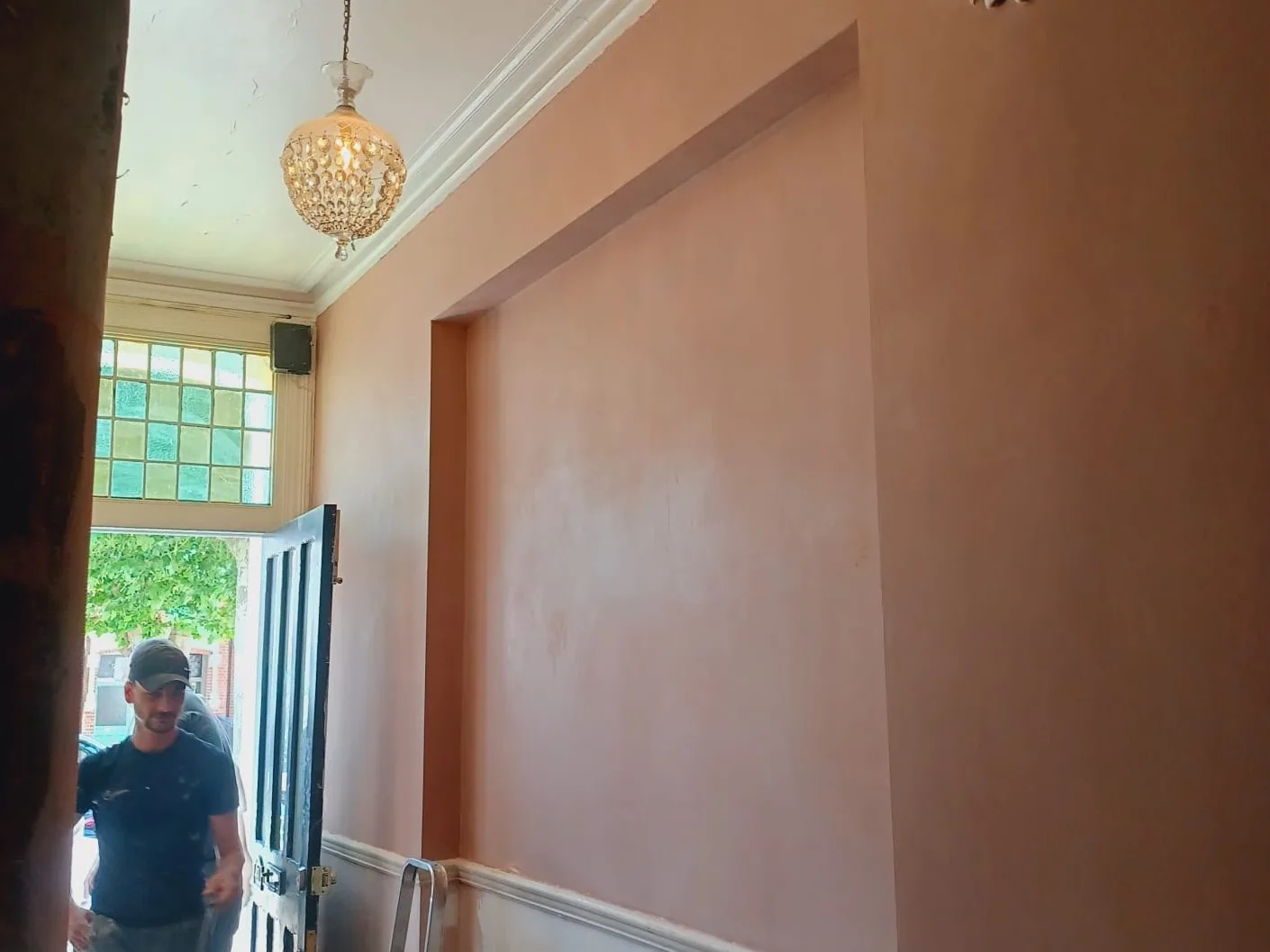
Water held against masonry
Debonded render traps rainwater behind it, keeping the wall wet and feeding internal damp patches.

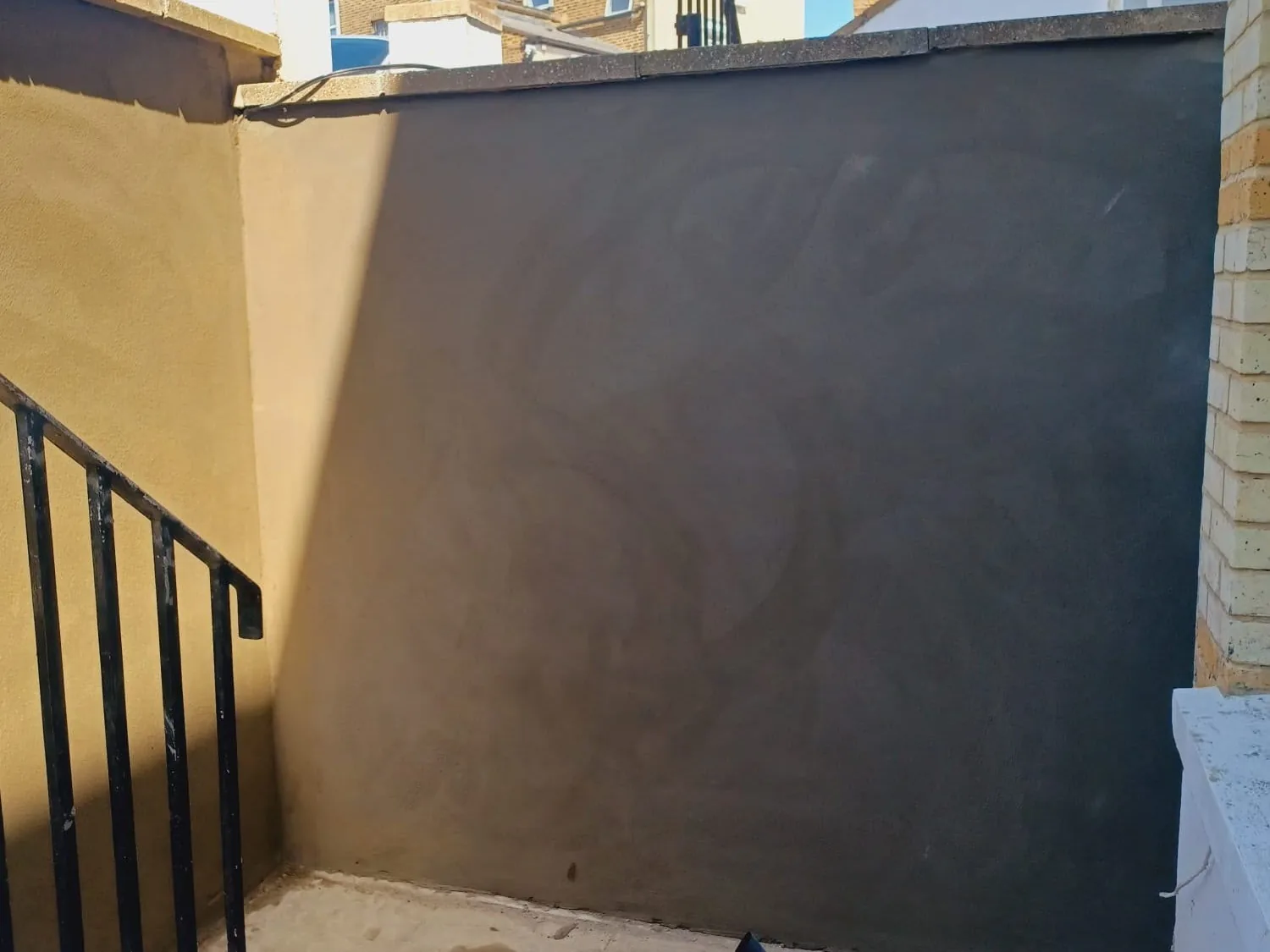
Damp proofing & remedial treatment specialists
Cracked, hollow or blown render holds water against your masonry. We identify why it failed, repair or renew it with a system suited to the substrate, and fix the damp it was causing inside.
Free survey and fixed-price quotation · Damp specialists, so the cause is addressed too
£0
Survey and written fixed-price quotation
Fixed price
Per job, never a day rate
6 months
Workmanship guarantee on building works
£2m
Public liability insurance held
Service overview
External render is a sacrificial weather coat. Its job is to take driven rain and shed it, keeping the masonry behind it dry. When it is sound it does that invisibly for decades. When it cracks, debonds or blows, it does the opposite: water gets behind the face and is held against the wall, so the elevation stays wetter than it would have been with no render at all.
Our work covers cut-out and patch repairs to localised failures, full re-rendering of elevations where the original coat has gone beyond repair, and rendering of new or altered masonry. We assess why the render failed before quoting, because a mix that was wrong for the substrate will fail again no matter how neatly it is applied.
This service suits solid-wall Victorian and interwar properties with rendered elevations, pebbledashed houses with sections blowing off, walls where previous patch repairs are cracking, and any property where internal damp has been traced to render failure.
It needs a damp specialist rather than a general renderer because render is an envelope component. Its detailing at the damp proof course line, at sills and at the base of the wall decides whether the wall stays dry.
Owners of rendered or pebbledashed properties with cracking, hollow patches, blown sections or staining inside the wall.
When render sounds hollow, cracks appear, sections fall away, or internal damp is worse on a rendered elevation after rain.
Mix, substrate compatibility and detailing at DPC and sill level determine whether render protects the wall or traps water in it.
Our work
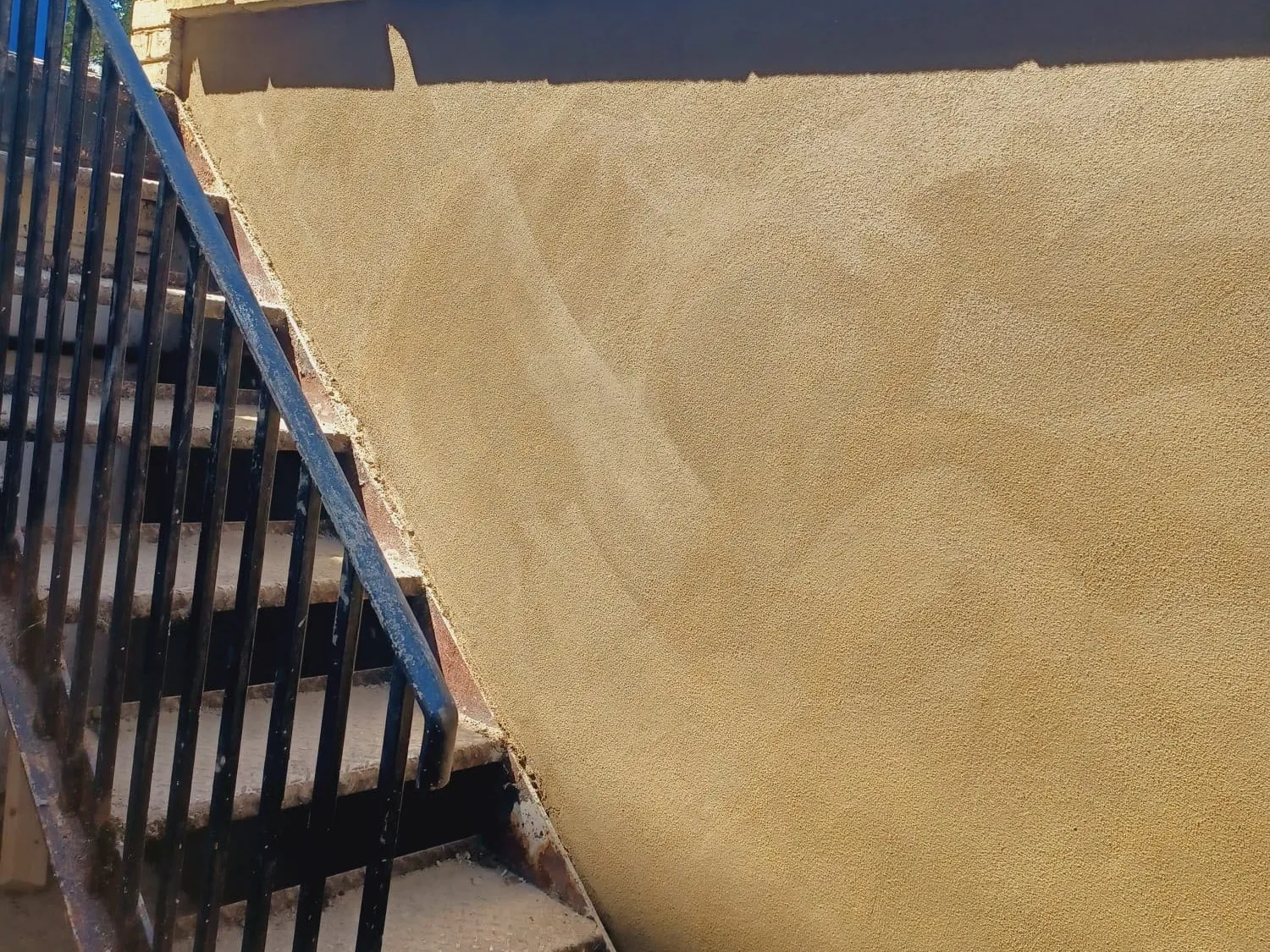
What happens if it is left
Render that has debonded forms a reservoir. Rain enters through a crack, runs down the back of the render face and is held against the brickwork, with little chance of drying because the render covers it. Internally that produces patchy penetrating damp that comes and goes with the weather.
The predictable mistake is cosmetic: filling cracks and painting over the elevation with masonry paint. The crack reopens, the paint film reduces the wall's ability to release moisture, and two years later the same section is hollow over a wider area.
Debonded render traps rainwater behind it, keeping the wall wet and feeding internal damp patches.
Saturated render and the brick behind it spall in freeze-thaw cycles, so the area needing replacement grows each winter.
Blown render eventually comes off in plates; a safety issue over a path, doorway or pavement.
Render carried down over the DPC gives moisture a route past it, producing damp that looks like a failed damp proof course.
Hard cement-rich mixes on soft or flexible substrates crack and debond again. The wrong specification cannot be fixed with better workmanship.
Painting over cracked render. It hides the defect, restricts drying and delays the repair until it is a full elevation.
Our process
Free survey: elevation tapped to map hollow areas, cracks assessed, base and DPC detail checked, and internal damp patterns matched to the external evidence.
We establish why the render failed; substrate, mix, movement or detailing, and specify a patch repair, partial renewal or full re-render accordingly.
Defective render cut back to sound material or stripped, substrate cleaned and prepared, beads and stops set, and access arranged.
Coats applied to the specified thickness and mix with proper curing, base and sill details formed so water is thrown clear, and the finish checked across the elevation.
Site cleared, balance due on completion, and a 6-month workmanship guarantee on the building work, or the 10-year damp guarantees where the render forms part of a damp treatment.
What you get
With water shed properly instead of held behind a failed coat, the masonry can dry and internal damp patches stop returning.
Mix and system are chosen for the wall you have, which is what stops the new render cracking and debonding like the old one.
We repair the render and make good the internal damage, so you are not coordinating two trades around one defect.
Loose and blown sections are removed rather than left to fall, which matters above footpaths, doors and windows.
A consistent finish across the elevation rather than a patchwork of repairs, with base and sill details that work.
The quotation covers scope and access arrangements as a fixed sum, so scaffolding is not a surprise mid-job.
In detail
Render is not one product. Choosing between traditional and modern systems, and matching them to the substrate, is the difference between a thirty-year coat and a five-year one.
The common British render is a two or three coat sand and cement system, sometimes with lime in the mix for workability and flexibility, applied over a prepared masonry background. It is cost-effective, durable on suitable substrates and easy to repair locally.
Its weakness is rigidity. On soft Victorian stock brick or a flexible background, a hard cement-rich mix cracks as the wall moves and then debonds, and because it is less permeable than the brick it can push moisture problems into the masonry. Getting the ratio and the number of coats right for the substrate is the whole skill.
Older solid-walled buildings were designed to absorb and release moisture. Lime render is vapour permeable and more forgiving of movement, which makes it appropriate where the wall needs to breathe and where a cement render has already failed for that reason.
It demands correct application and protection while curing, and it is specified where the building fabric calls for it rather than as a default.
Pebbledash and roughcast are common across interwar London suburbs. Repairs to them need the aggregate and application matched, otherwise a patch stands out from several houses away, so blending across a whole panel or elevation is often the right call visually.
Modern thin-coat and polymer-modified systems on mesh, and monocouche through-coloured renders, offer crack resistance and a consistent factory-set colour. They are specified on suitable substrates and where the client wants a finish that does not need painting.
The decision comes from tapping the elevation. If hollow areas are isolated and the remainder is well bonded, cutting out to sound material and rebuilding the coats locally is the economical answer, accepting some visual difference unless the elevation is painted.
Where hollow areas are extensive, cracking is widespread, or the original mix was wrong for the wall, stripping and re-rendering the elevation is cheaper over a decade than repeated patching, and it is the only way to correct base and DPC detailing across the wall.
Render should stop clear of the damp proof course, with a bell cast or drip so water is thrown off the face rather than running down onto the base of the wall or across the DPC. Sills, string courses and copings need the same logic: a route for water to leave the wall.
Around windows and doors the junction between render and frame needs a serviceable seal, and expansion or movement joints are provided where the elevation length requires them.
Domestic rendering covers houses, flats, extensions, boundary and garden walls. Commercial work covers shopfronts, offices and industrial elevations where access, signage and trading hours shape the programme.
In both cases the render is priced as a fixed sum including access, and building work carries our 6-month workmanship guarantee. Where the rendering forms part of a specialist damp treatment, the 10-year workmanship and QANW insurance-backed guarantees apply to that treatment.
Carried out across Harrow, Wembley, Pinner, Stanmore, Edgware, Ealing, London, Middlesex, Watford, Buckinghamshire, Slough, Brent, Surrey, High Wycombe, West London, see the full list of areas covered.
Questions
It depends on the area, the number of storeys, access requirements, how much existing render has to come off and the system specified. We survey free of charge and give you a fixed price for the defined scope.
A patch repair can be a day or two. A full elevation typically runs one to two weeks including removal, coats and curing, plus access set-up. Weather affects the programme and we will be straight with you about it.
Yes, where the hollow areas are isolated and the surrounding render is well bonded. We tap the elevation at survey to establish which is the better value approach.
Rendering as building work carries a 6-month workmanship guarantee. Where it forms part of a specialist damp treatment, that treatment carries the 10-year workmanship guarantee and the 10-year QANW insurance-backed guarantee.
A correctly specified render on a sound, prepared substrate lasts for decades. Premature failure is nearly always a mix or detailing issue, or water entering from an unrepaired defect above.
It will if render failure was the route the water was taking. That is why we diagnose before quoting rather than assuming render is the answer.
Anything above ground-floor reach needs proper access. It is included in the fixed price so there is no separate bill later.
Yes, once it has cured. Where a wall needs to breathe we will advise on a breathable coating rather than a film-forming paint, or specify a through-coloured system so painting is not needed.
Yes. Matching aggregate and texture is the challenge, and we will tell you honestly whether a patch will blend or whether a panel should be finished as a whole.
London, Middlesex, Watford, Buckinghamshire, Slough, Brent, Surrey, High Wycombe and West London.
Free survey
Send photos or describe where the render is cracking or sounding hollow, and whether you have damp inside. The survey is free and the quotation is a fixed price including access.
Related services
Damp that worsens after rain is coming in from somewhere. We find the route: pointing, render, sills, gutters or roof detail; correct it, then repair the wall inside. Free survey, fixed price, no guesswork.
Penetrating damp treatment in London & MiddlesexOpen joints and spalled brick faces are the most common route for penetrating damp. We cut out properly, repoint in a mortar matched to your brick, and replace masonry that has broken down.
Brickworks & repointing in London & MiddlesexThe replaster is half of any damp repair. We remove contaminated plaster, apply the specified salt-retardant system and leave a flat, decoration-ready finish, as part of a fixed price, by the same contractor that treated the wall.
Plastering in London & Middlesex