Salts keep the surface damp
Hygroscopic salts in old plaster attract moisture from room air indefinitely. Skimming over them guarantees a return of the marks.

Damp proofing & remedial treatment specialists
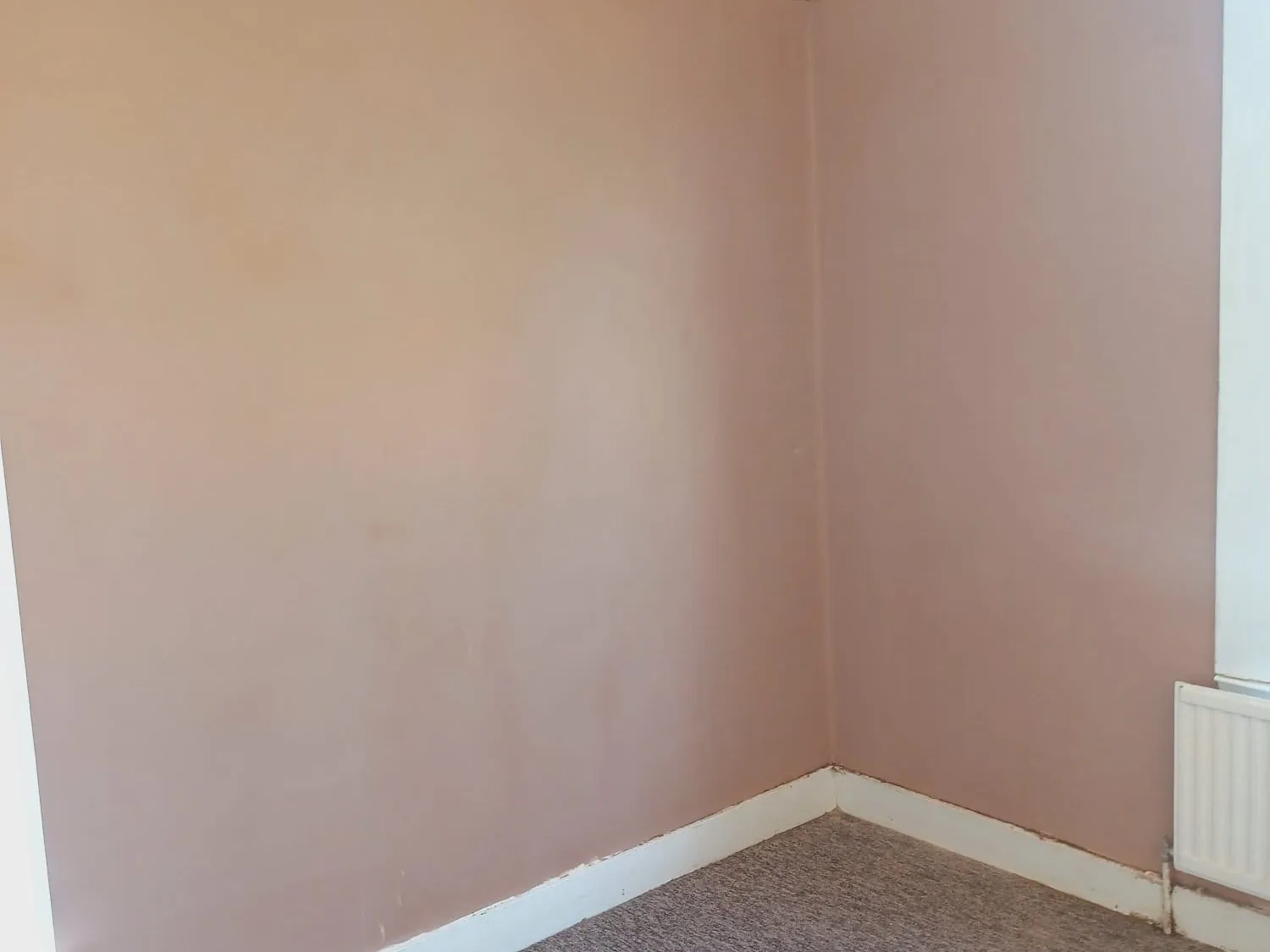
The replaster is half of any damp repair. We remove contaminated plaster, apply the specified salt-retardant system and leave a flat, decoration-ready finish, as part of a fixed price, by the same contractor that treated the wall.
Specialist damp replastering · Free survey and fixed-price quotation · Approved Sovereign and Wykamol contractor
Fixed price
Quoted per job, never a day rate
10 years
Guarantees on damp treatment including its replaster
£0
Survey and written quotation
£2m
Public liability insurance held
Service overview
Plastering after damp treatment is a technical specification, not a cosmetic finish. Walls that have been wet for years hold hygroscopic salts, and plaster containing those salts keeps drawing moisture out of room air, so a wall can read dry and still ruin new decoration. The contaminated plaster is removed and replaced with a salt-retardant render and skim system that keeps those salts away from the new surface.
We also carry out general plastering: skimming over existing sound plaster, plasterboarding and taping, patch repairs after building work, reveals and beading around new openings, and full re-plastering of rooms being brought back into use.
This suits homeowners who have had damp treated and want the room finished properly, landlords preparing a property for letting, and anyone whose walls have been patched so many times they need a flat surface again.
It needs a specialist because the build-up matters: the wrong mix, the wrong thickness or plastering too soon over a treated wall is the most common reason damp 'comes back'. Done correctly, the finish is stable and takes decoration normally.
Properties with treated damp needing replastering, and rooms needing skimming, boarding or patch repairs to a clean flat finish.
After damp treatment, after building or remedial work, or where plaster is blown, cracked, hollow or salt-damaged.
Salt-retardant systems have a defined specification and sequence. A standard skim over a treated wall undoes the treatment.
Our work
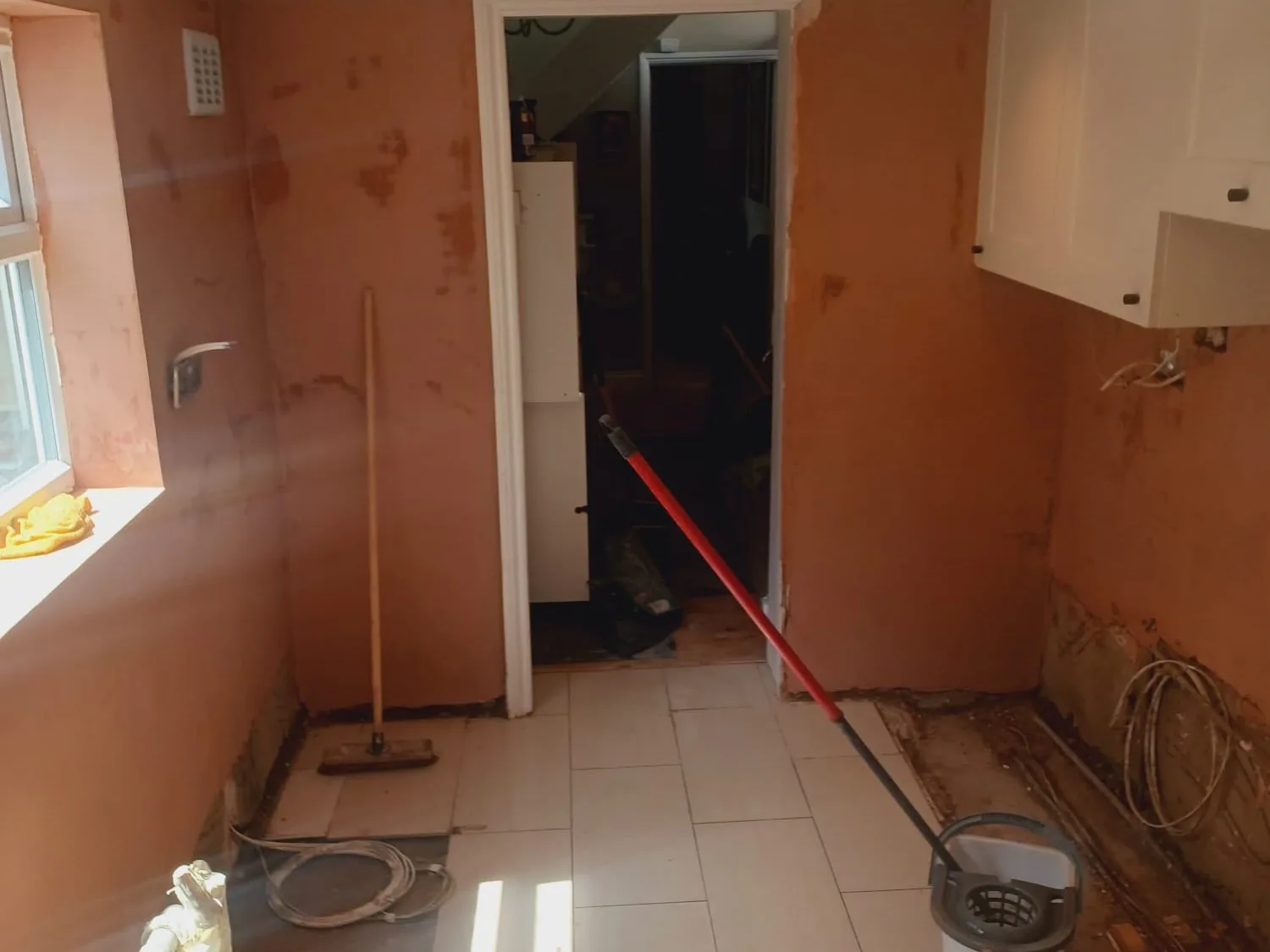
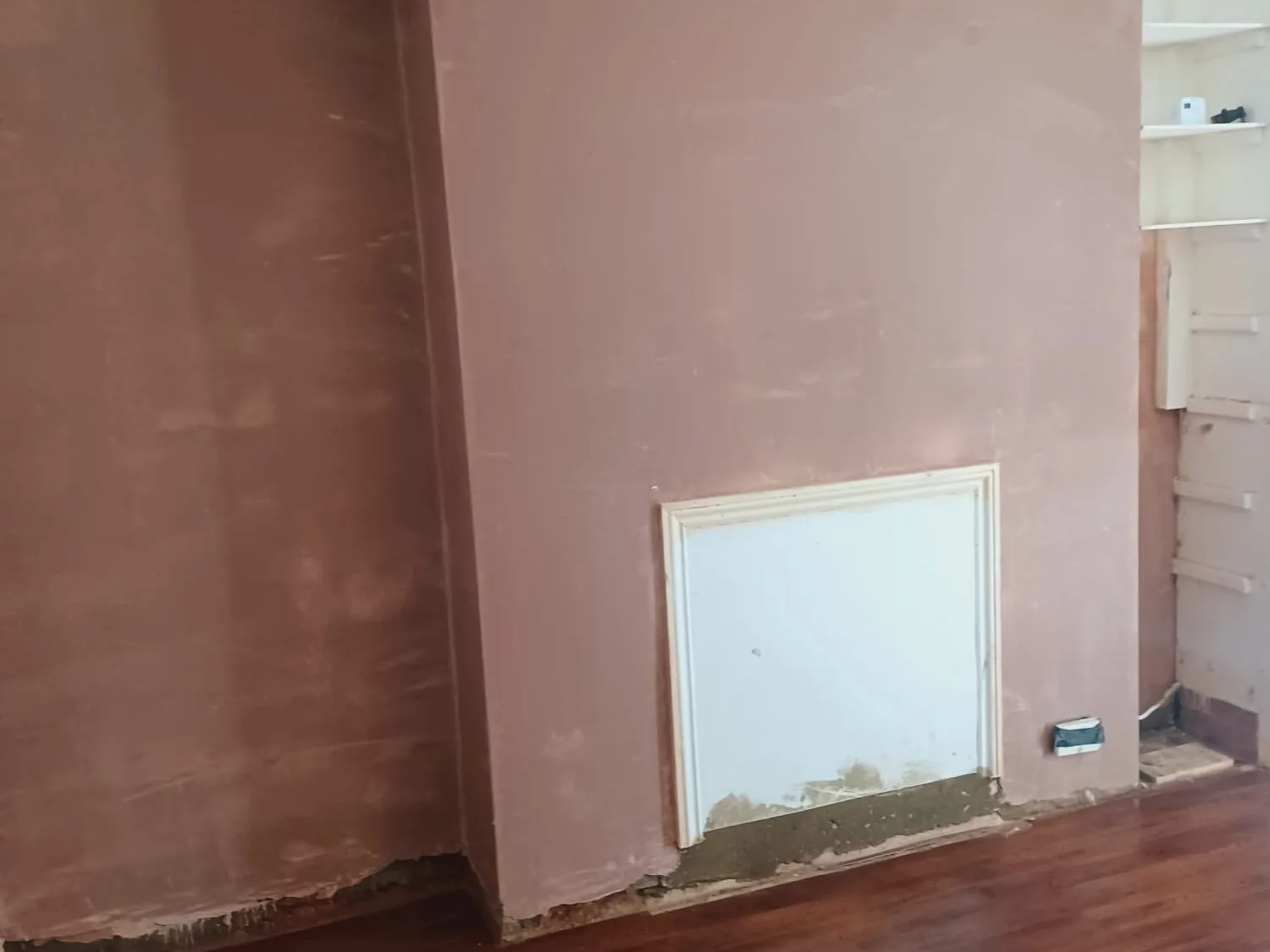
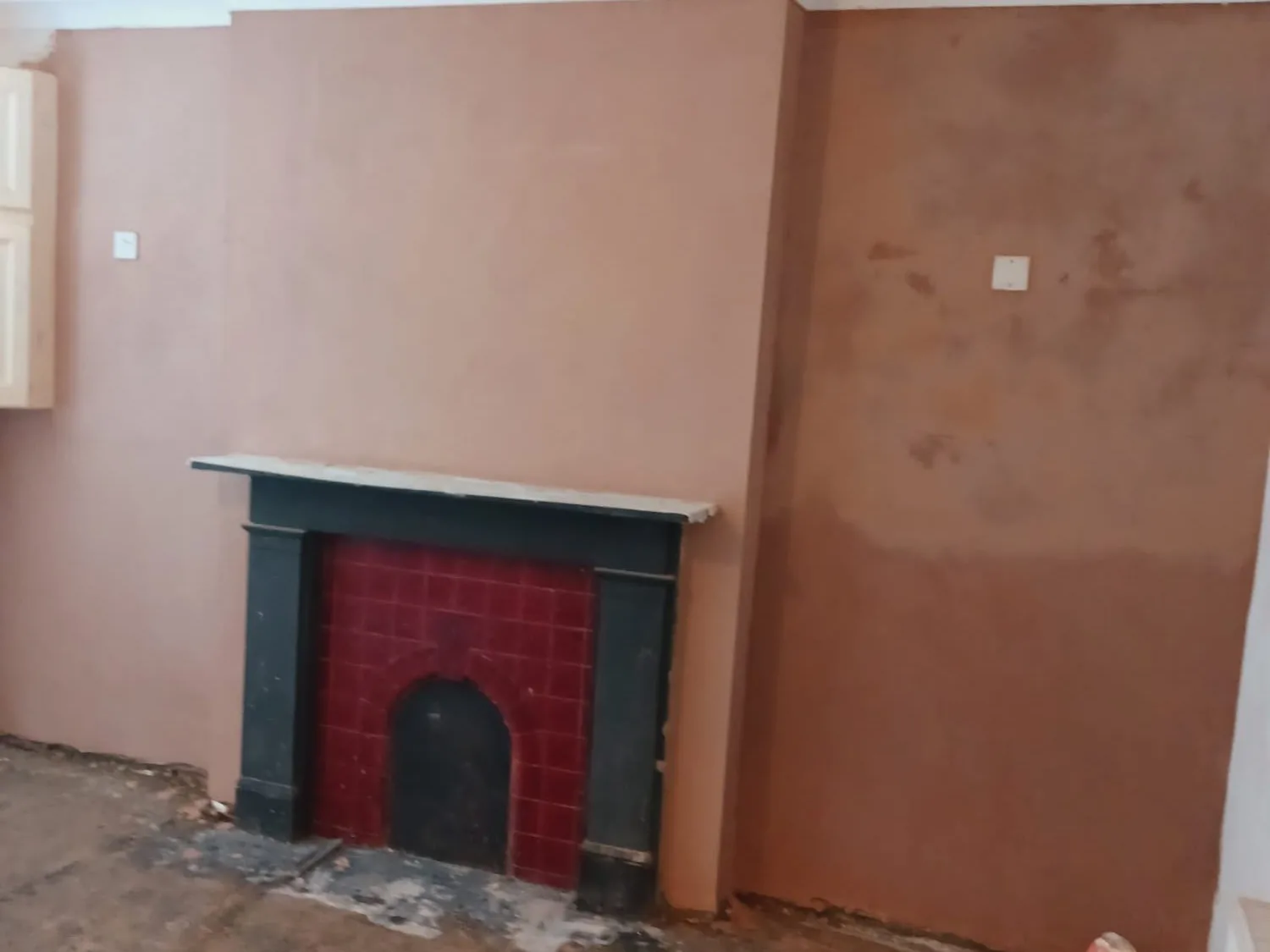
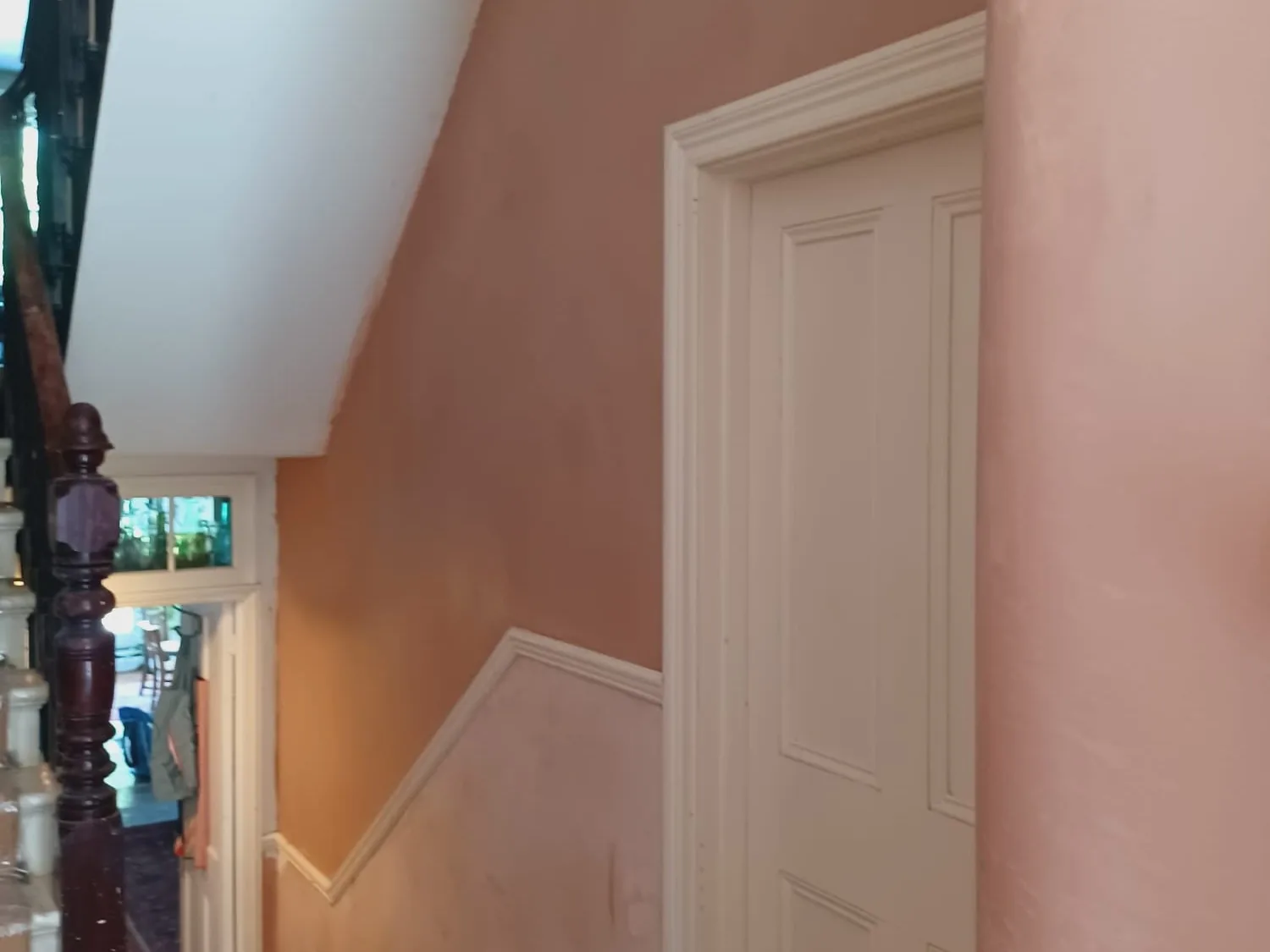
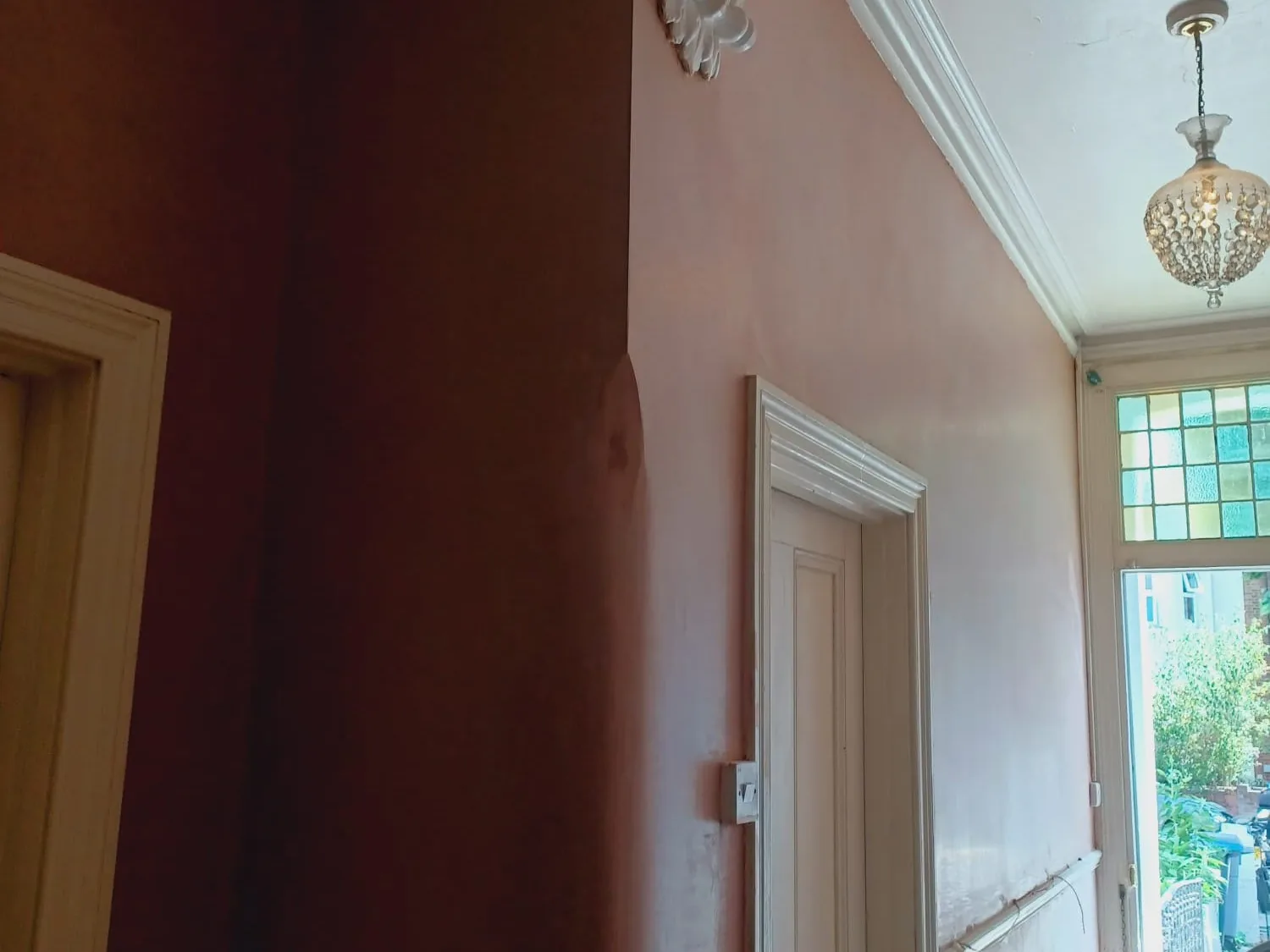
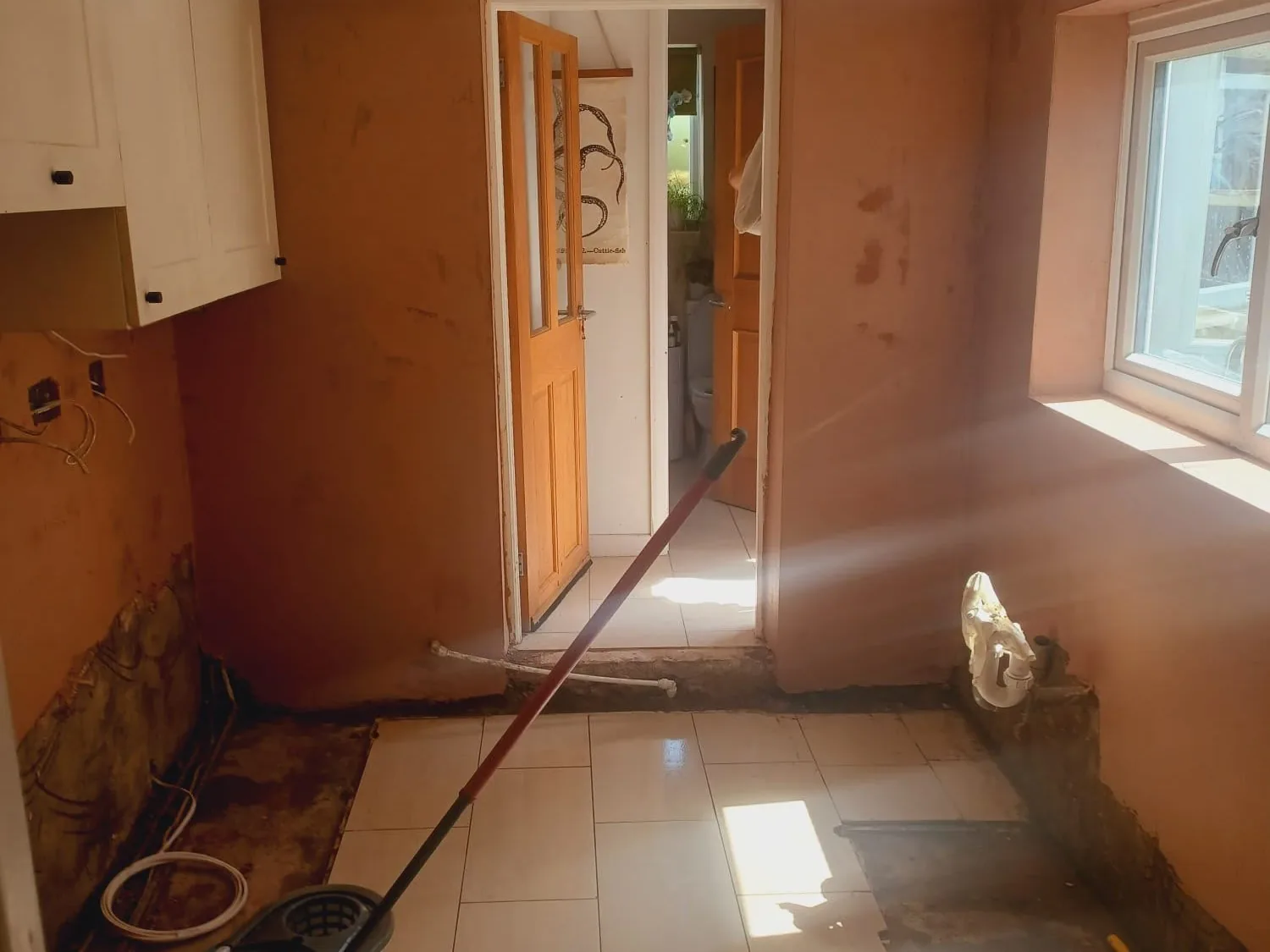
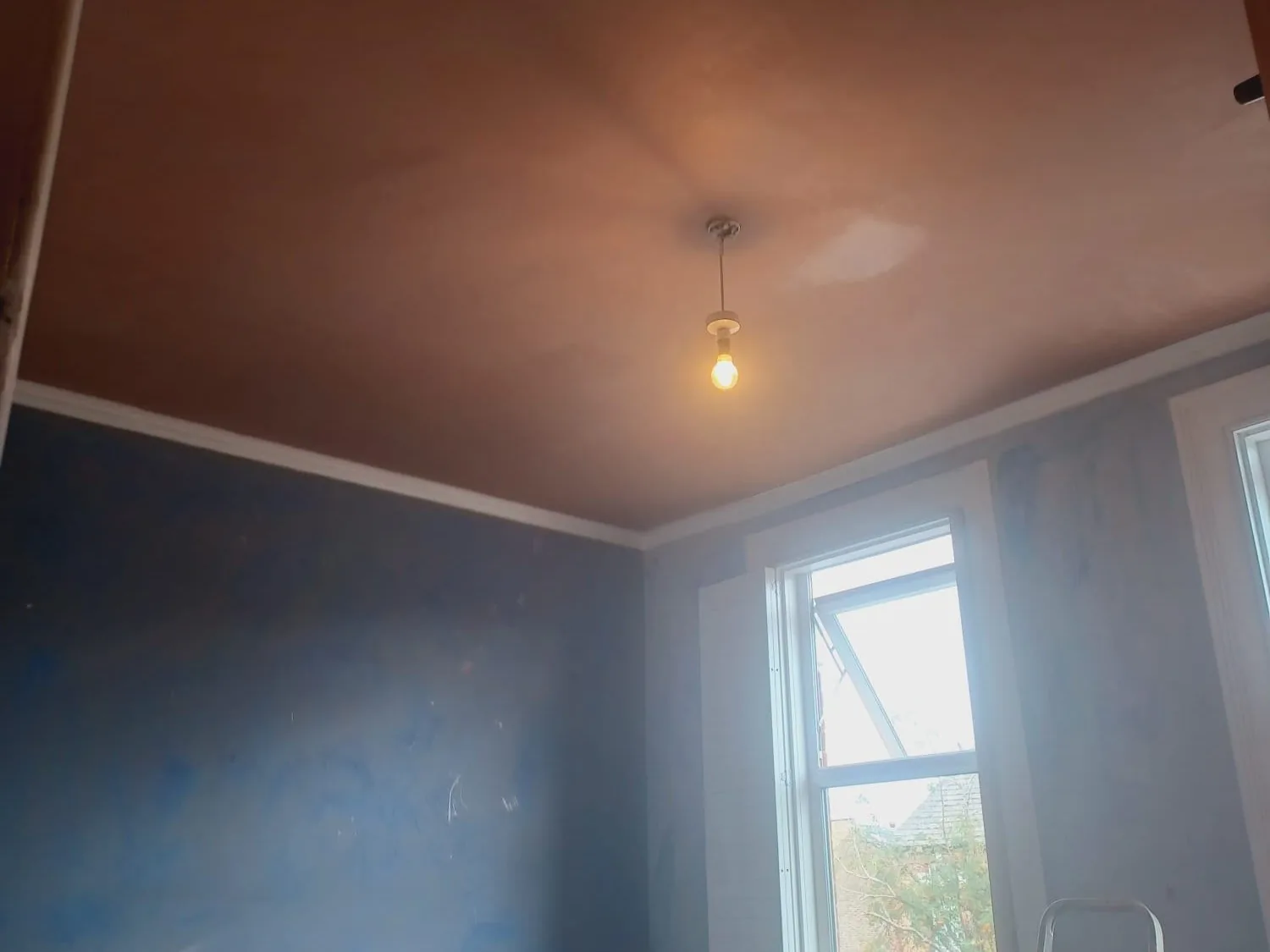
What happens if it is left
Every failed damp job we see has a plaster story behind it. Either the old contaminated plaster was left in place and skimmed over, or a standard render mix was used where a salt-retardant system was specified, or decoration went on before the new plaster had dried.
The result is always the same: staining, blistering paint or a chalky bloom appearing within weeks, and a homeowner who assumes the damp treatment failed when in fact the finish did.
Hygroscopic salts in old plaster attract moisture from room air indefinitely. Skimming over them guarantees a return of the marks.
Paint blisters and wallpaper lifts on plaster that is either salt-contaminated or not yet dry, so the decorating bill gets paid twice.
Plaster applied over dusty, friable or painted backgrounds does not key properly and eventually sounds hollow and cracks.
Accredited damp systems include their replaster specification. Deviating from it puts the benefit of the system at risk.
Missing beads, unfilled joints and untaped boards produce the cracks that reappear every year at corners and ceiling lines.
Painting new plaster too early with a non-breathable emulsion, sealing residual moisture in and pushing it back out through the paint film.
Our process
The wall is assessed for salt contamination, plaster soundness, background type and moisture state, alongside whatever damp treatment is needed first.
We set out the build-up: strip-out height, render system and additives, board or wet-plaster approach, beads and finish, plus expected drying times.
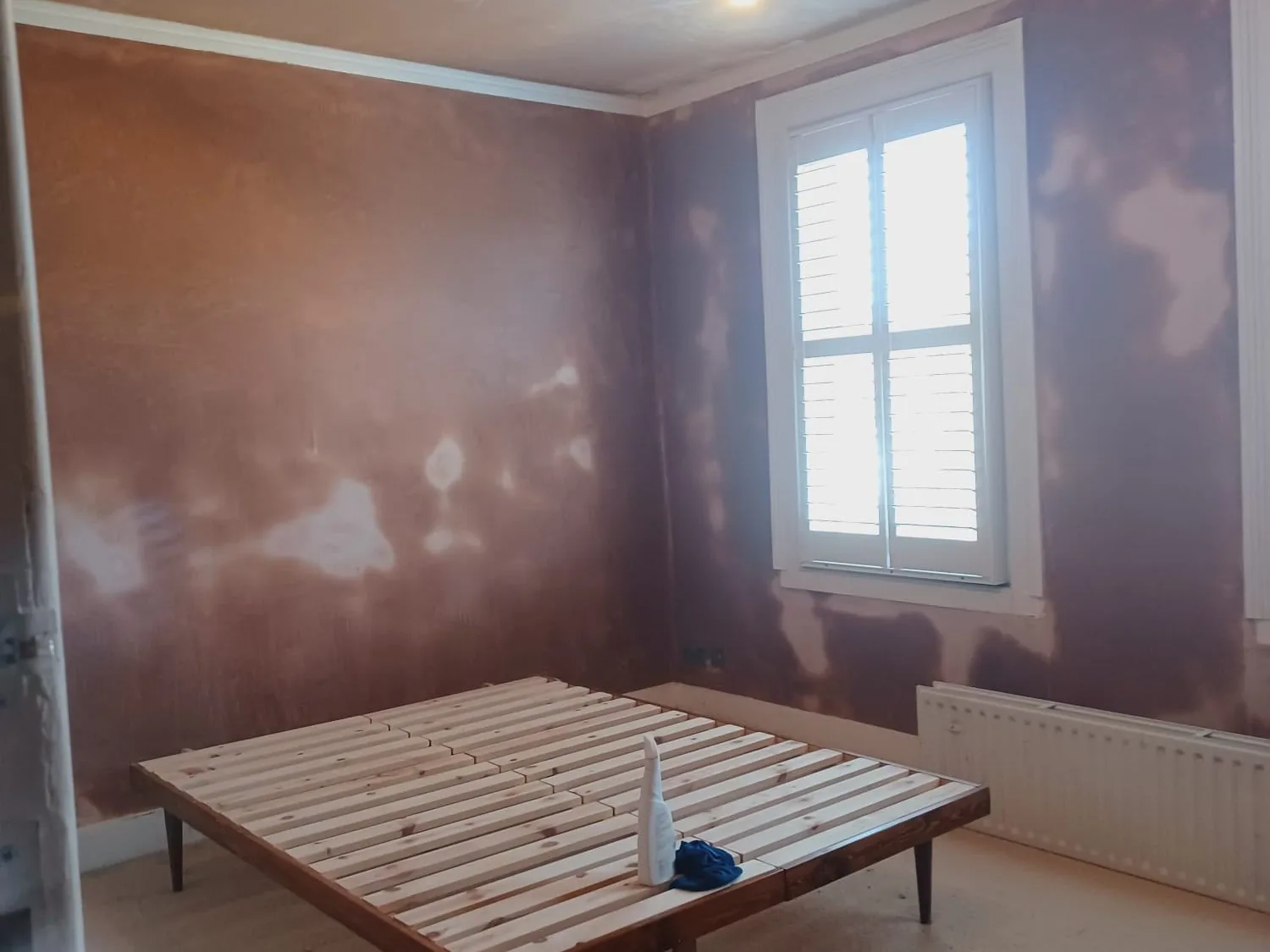
Contaminated or hollow plaster removed, areas sheeted, backgrounds cleaned and prepared so the new system keys properly.
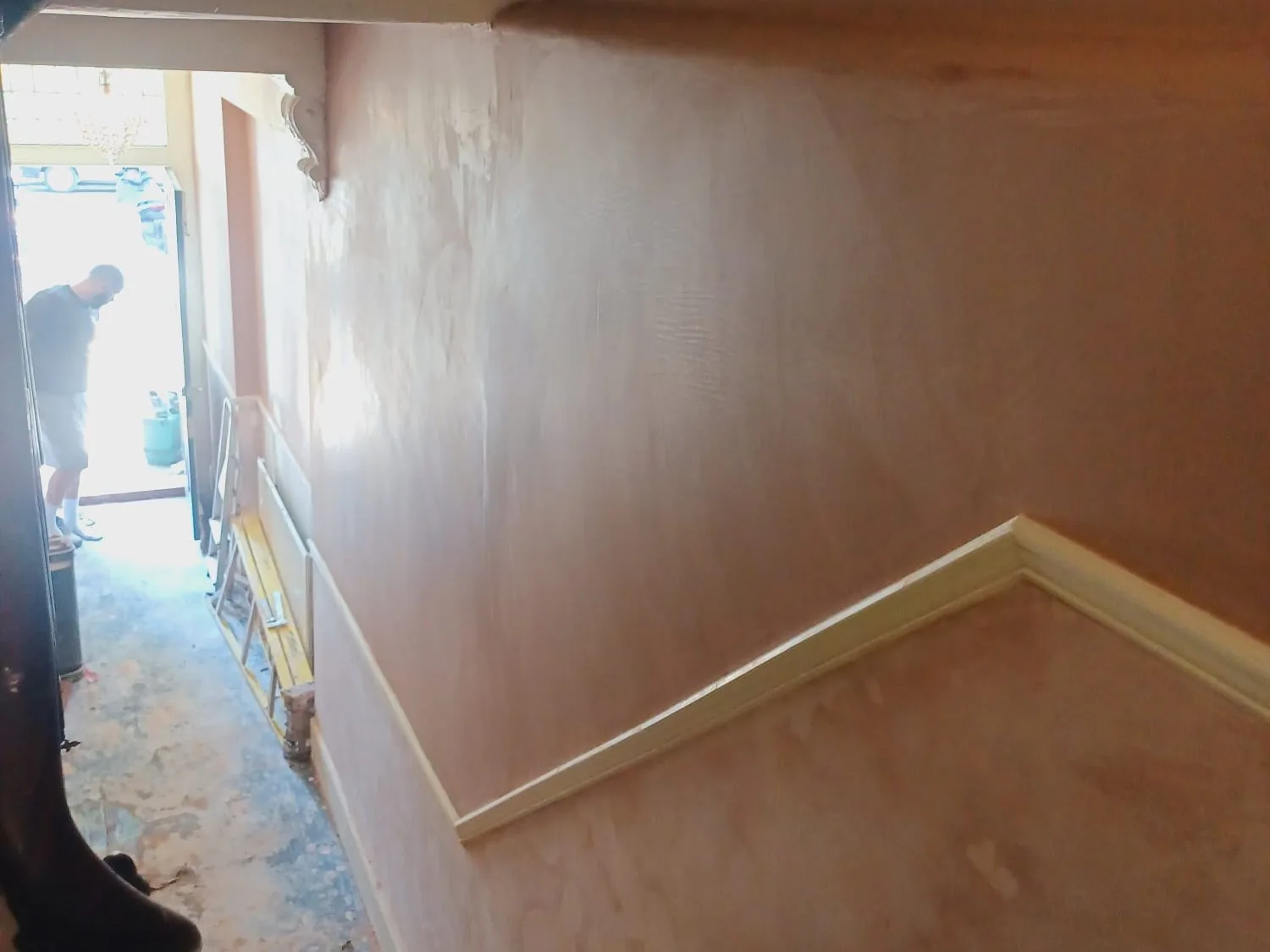
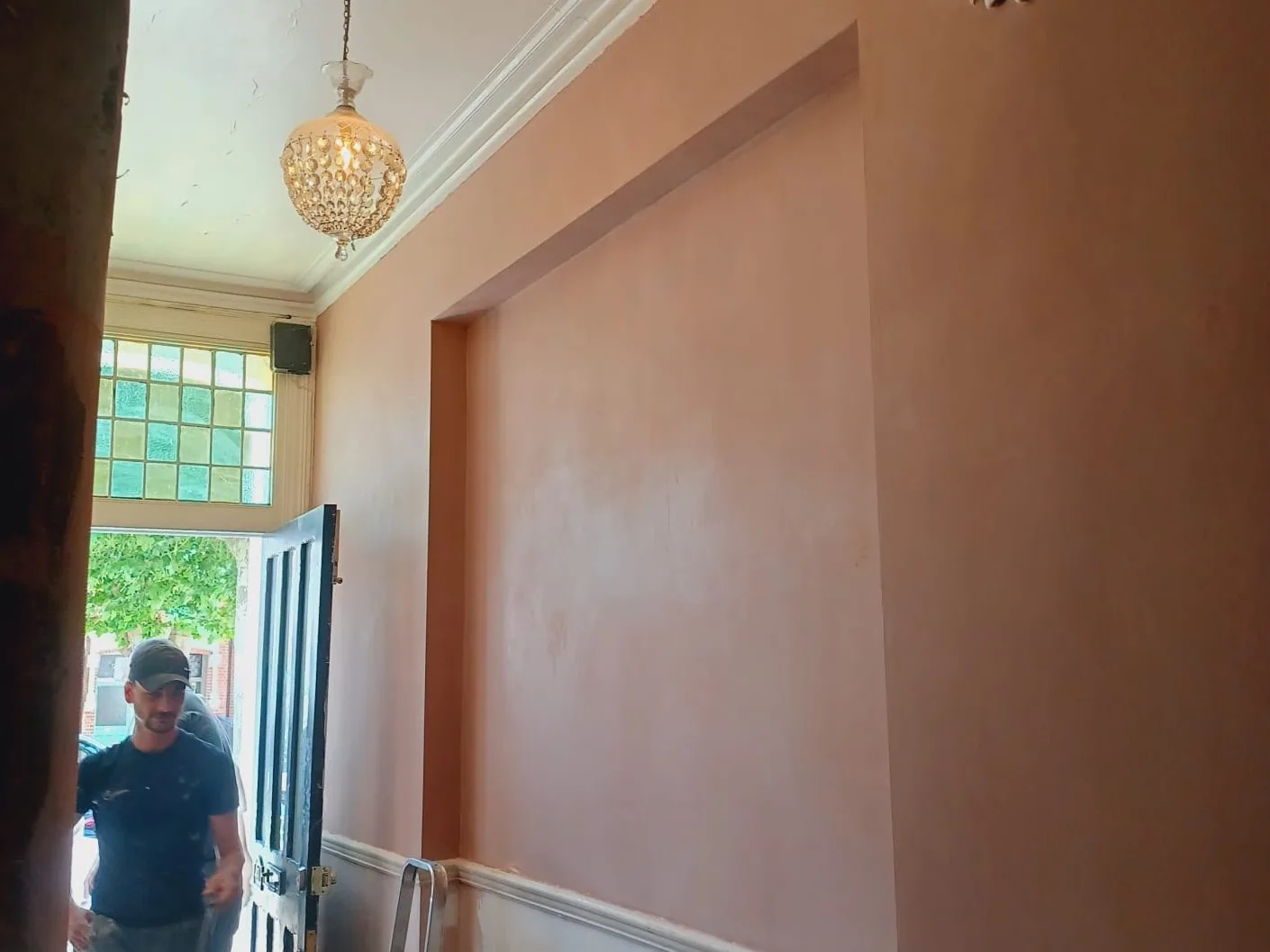
Salt-retardant render or board applied to specification, then skimmed flat and checked for level, beading and coverage before we leave.
Area cleaned down, drying and decoration guidance given, and the balance due on completion.
What you get
A correct salt-retardant build-up gives paint and paper a stable background, so the room only has to be decorated once.
Treatment and replastering are quoted and carried out together, so there is no gap between trades and no argument over whose fault a problem is.
Walls left level, beaded and ready for decoration rather than patched into something a decorator has to rescue.
Replastering follows the accredited system's requirements, which is what keeps the 10-year guarantees meaningful.
You are told how long to wait before full decoration, and what to use first, rather than discovering it through failed paint.
Strip-out height, areas and finish are stated in the quotation and priced as a fixed sum.
In detail
Plastering choices come down to the background, the moisture history and the finish required. Each combination has an appropriate build-up.
The standard remedial build-up after damp proof course installation is a sand and cement render incorporating a waterproofing additive and salt inhibitor, applied in coats to a specified thickness, then finished with a skim. The render's job is to hold back residual salts and moisture so they never reach the decorated surface.
Strip-out height matters: plaster is normally removed to around a metre above the highest visible sign of damp, because salt contamination extends beyond the visible mark. Coving, skirtings and sometimes architraves come off to allow a continuous system, and are reinstated as part of the making good.
Where a traditional sand and cement build-up is unsuitable: a wall that must breathe, a heritage finish, or a room that has to be usable quickly; lightweight renovating plasters or a membrane and dry-lining approach can be specified instead. Membrane systems separate the finish from the wall entirely, which is often the answer in basements and on very wet structures.
Each option has trade-offs in drying time, wall thickness, durability and cost, and the survey explains which applies to your wall rather than defaulting to one method for every property.
Beyond damp work we skim over sound existing plaster, board and tape new stud and ceiling areas, form and bead reveals after windows or openings are altered, repair cracks and hollow sections, and re-plaster whole rooms during refurbishment.
Preparation carries the result: removing loose material, treating dusty or high-suction backgrounds, fitting angle and stop beads, and taping board joints properly. It is the part that decides whether a wall still looks flat in five years.
New render and plaster contain water and must release it. As a rule of thumb, wet-plastered walls need weeks rather than days before full decoration, longer for thick coats, cold weather or poor ventilation. Heating the room gently and keeping air moving speeds it; blasting heat at the wall does not.
A breathable mist coat first allows remaining moisture out while giving you a presentable surface. We tell you the expected timescale for your specific build-up at handover.
In homes the focus is a clean, level, decoration-ready finish with disruption kept to the rooms involved. In commercial premises the same standards apply with work phased around occupation and trading hours.
Plastering carried out as part of damp treatment falls under the 10-year damp guarantees; general plastering carried out as building work carries our 6-month workmanship guarantee.
Carried out across Harrow, Wembley, Pinner, Stanmore, Edgware, Ealing, London, Middlesex, Watford, Buckinghamshire, Slough, Brent, Surrey, High Wycombe, West London, see the full list of areas covered.
Questions
It depends on wall area, strip-out height, the system specified and whether skirtings and coving need removing and reinstating. It is quoted as part of the fixed price for the damp works after a free survey.
A single wall is typically a day or two including strip-out; a full room takes longer. Drying time afterwards is separate and is confirmed at handover.
Weeks rather than days for wet-plastered walls, depending on thickness, weather and ventilation. Start with a breathable mist coat and avoid heavy non-breathable paints or wallpaper until the wall has released its moisture.
Because salt-contaminated plaster keeps attracting moisture from the air. Skimming over it traps the problem behind a new surface that will stain and blister.
Replastering carried out as part of damp treatment falls under the 10-year workmanship guarantee and 10-year QANW insurance-backed guarantee. General plastering carries a 6-month workmanship guarantee.
Correctly specified plaster on a properly prepared background and a dry wall is a long-term finish. Failures almost always trace back to moisture or preparation rather than the plaster itself.
Yes: skimming, boarding, patch repairs and full room re-plastering are all available as general plastering work.
Strip-out is dusty and plastering is wet work. Rooms are sheeted, furniture moved or covered, and the area cleaned down on completion.
We can match flat finishes and reinstate standard skirtings and coving. Tell us about any decorative or period mouldings at survey so it is allowed for in the quotation.
London, Middlesex, Watford, Buckinghamshire, Slough, Brent, Surrey, High Wycombe and West London.
Free survey
Whether it follows damp treatment or is straight plastering work, we will survey it free of charge and quote a fixed price for a flat, decoration-ready finish.
Related services
A failed damp proof course is diagnosed, treated with an accredited Sovereign or Wykamol system and replastered to a decoration-ready finish, priced as a fixed sum before any work starts, and guaranteed for ten years.
Rising damp treatment in London & MiddlesexTreatment stops the damp; remedial work makes the room liveable again. Plaster, joinery, floors, decoration preparation and making good, completed by the contractor that did the specialist work, at a fixed price.
Small refurbishment & remedial works in London & MiddlesexCracked, hollow or blown render holds water against your masonry. We identify why it failed, repair or renew it with a system suited to the substrate, and fix the damp it was causing inside.
Rendering in London & Middlesex