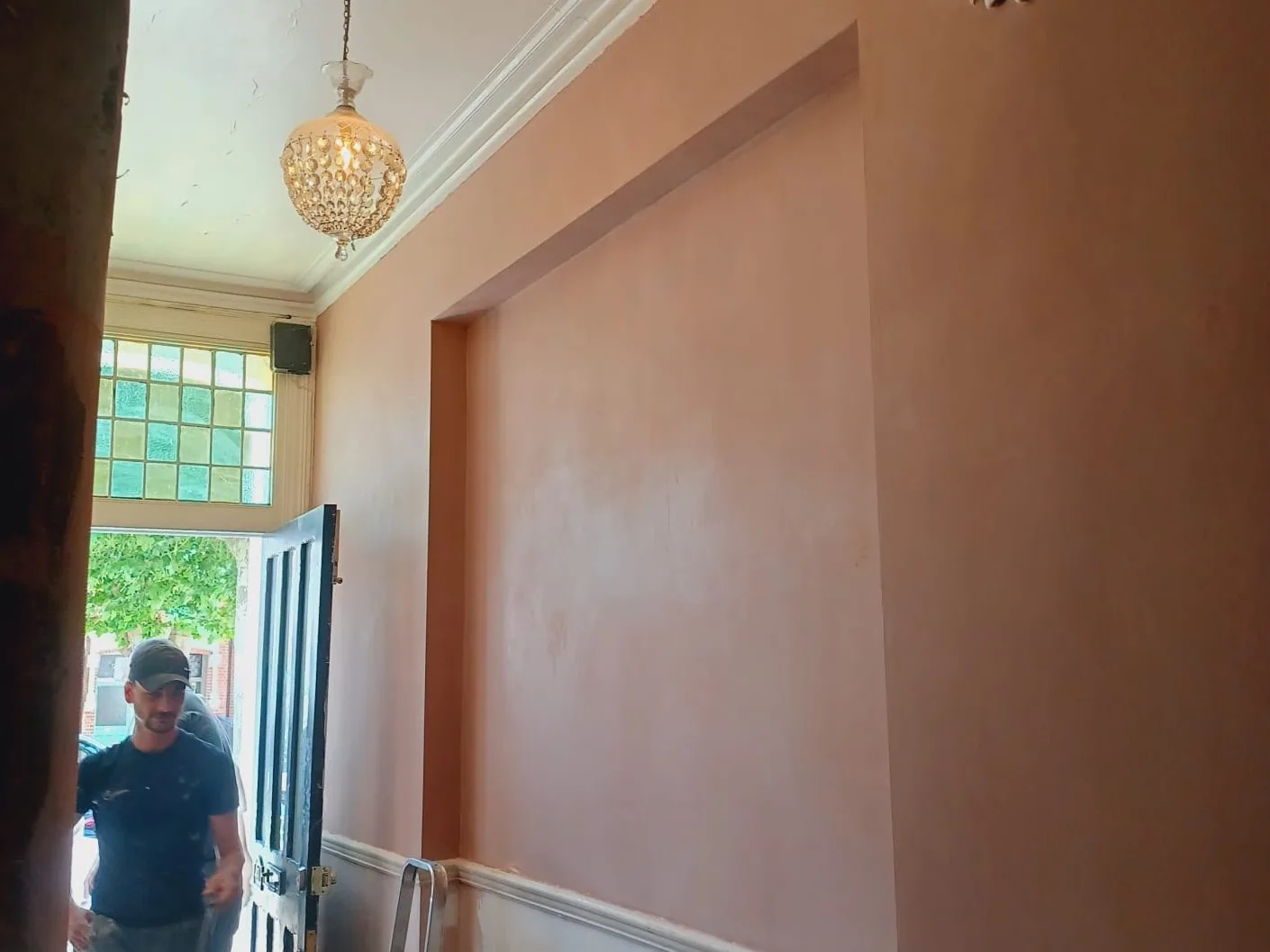
We factor in the ground, not just the wall
On sloping Stanmore sites the source of damp is often what is happening outside and below the property, retaining walls, drainage and ground levels, as much as the wall itself.

Damp proofing in Stanmore
Substantial 1930s and modern detached houses, sloping sites off Stanmore Hill and below-ground rooms all bring their own damp problems. Free survey, written fixed price, ten-year guarantees on treatment.
Free survey in Stanmore, Belmont and Canons Park · Sovereign & Wykamol approved · 10-year QANW insurance-backed guarantee
10 years
Company workmanship guarantee on damp treatment
10 years
QANW insurance-backed guarantee
£0
Survey, diagnosis and fixed-price quotation in Stanmore
£2m
Public liability insurance held
Local coverage
Stanmore sits on some of the highest ground in this part of Middlesex, and that shapes the damp problems we see. Belmont and Canons Park are largely made up of substantial 1930s detached housing, generous plots, bay windows, hipped roofs and early cavity construction, alongside more recently built large detached homes that have replaced older houses on the same generous plots. Harrow Weald and the fringe towards Bushey Heath add a similar mix, with some post-war infill among the interwar stock.
Along Stanmore Hill itself the ground falls away steeply, and the road is lined with an interesting mix, older cottages and smaller period houses close to the hill alongside much larger detached properties set back on sloping plots. Retaining walls, stepped gardens and below-ground rooms cut into the hillside are common here in a way they are not on flatter ground nearby.
A lot of the larger Stanmore houses have integral garages, some converted to habitable rooms, and many have had flat-roofed rear or side extensions added over the years. Basements and cellars, whether original or newly excavated as part of a larger renovation, are also a regular feature of the higher-value property in this area.
We survey free of charge across Stanmore and the surrounding area, with calls taken Monday to Friday 8am to 8pm and Saturday 8am to 1pm.
1930s and modern large detached houses, period cottages along Stanmore Hill, integral and converted garages, and flat-roofed extensions.
Retaining wall dampness on sloping plots, water ingress to below-ground rooms, damp in converted garages, and penetrating damp from flat roofs.
Structural tanking and cavity drain membrane systems specified for hillside sites where ground water pressure is a real factor, not an assumption.
Services in Stanmore
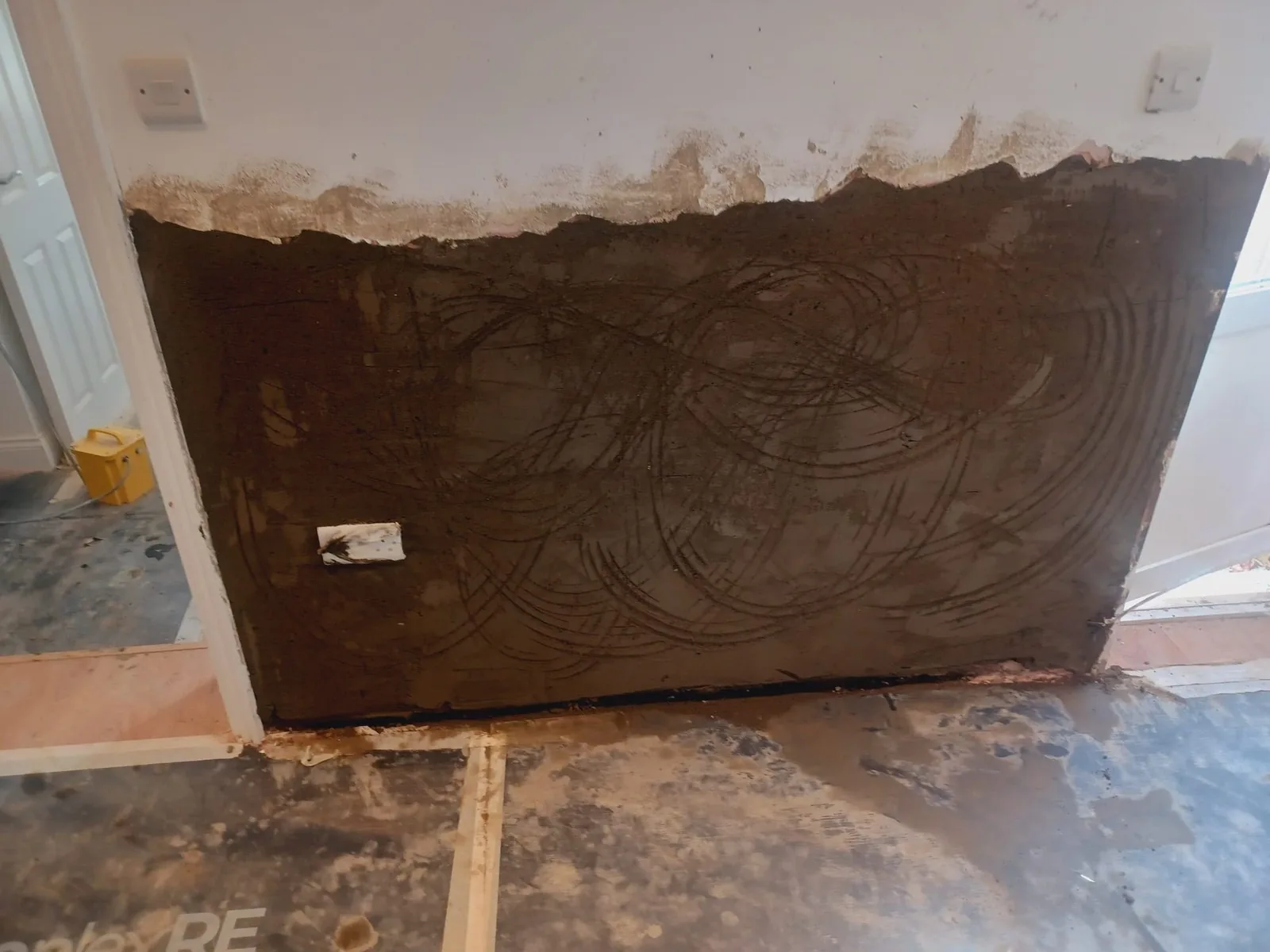
A failed damp proof course is diagnosed, treated with an accredited Sovereign or Wykamol system and replastered to a decoration-ready finish, priced as a fixed sum before any work starts, and guaranteed for ten years.
Rising damp treatment in Stanmore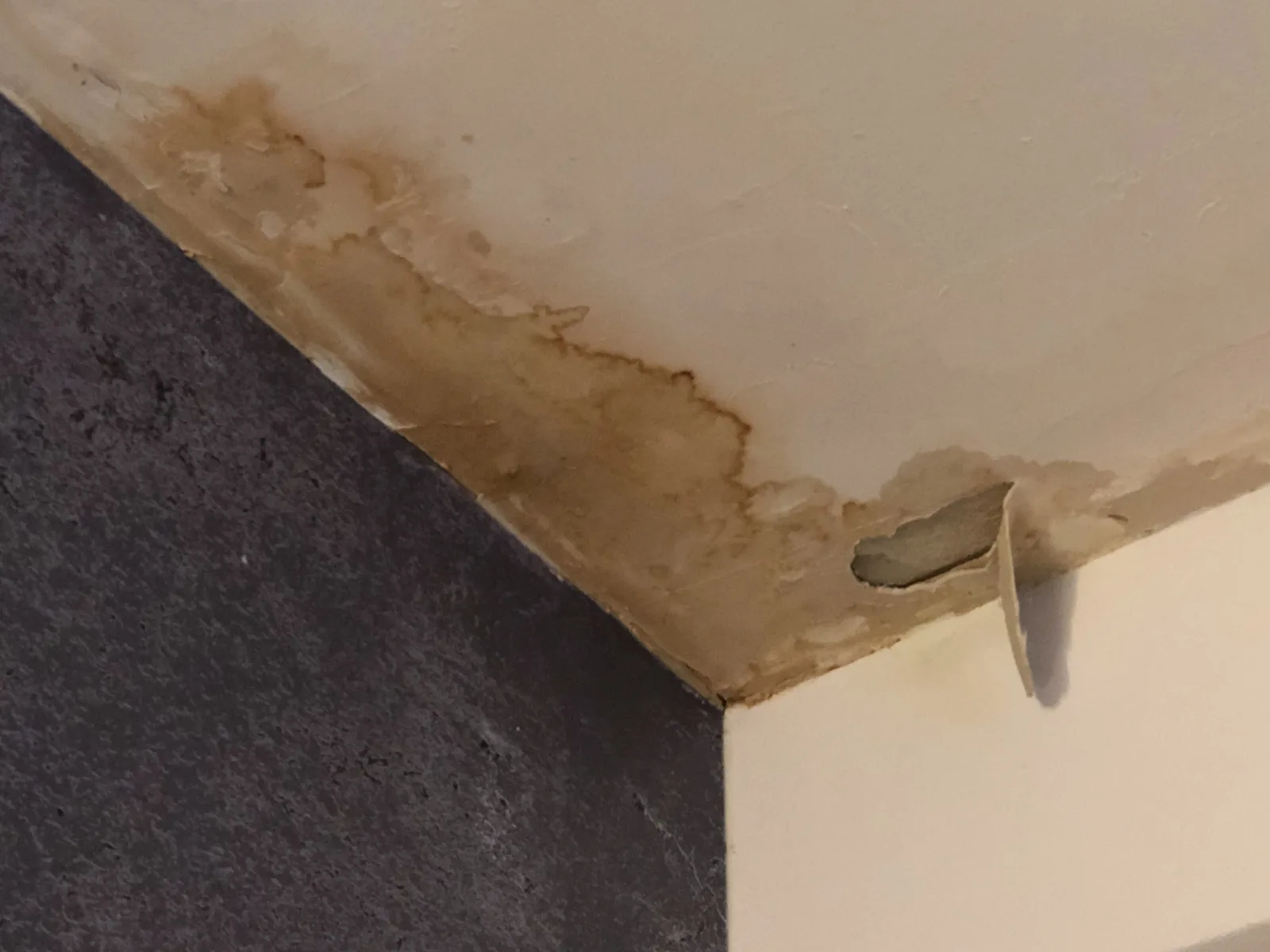
Damp that worsens after rain is coming in from somewhere. We find the route: pointing, render, sills, gutters or roof detail; correct it, then repair the wall inside. Free survey, fixed price, no guesswork.
Penetrating damp treatment in Stanmore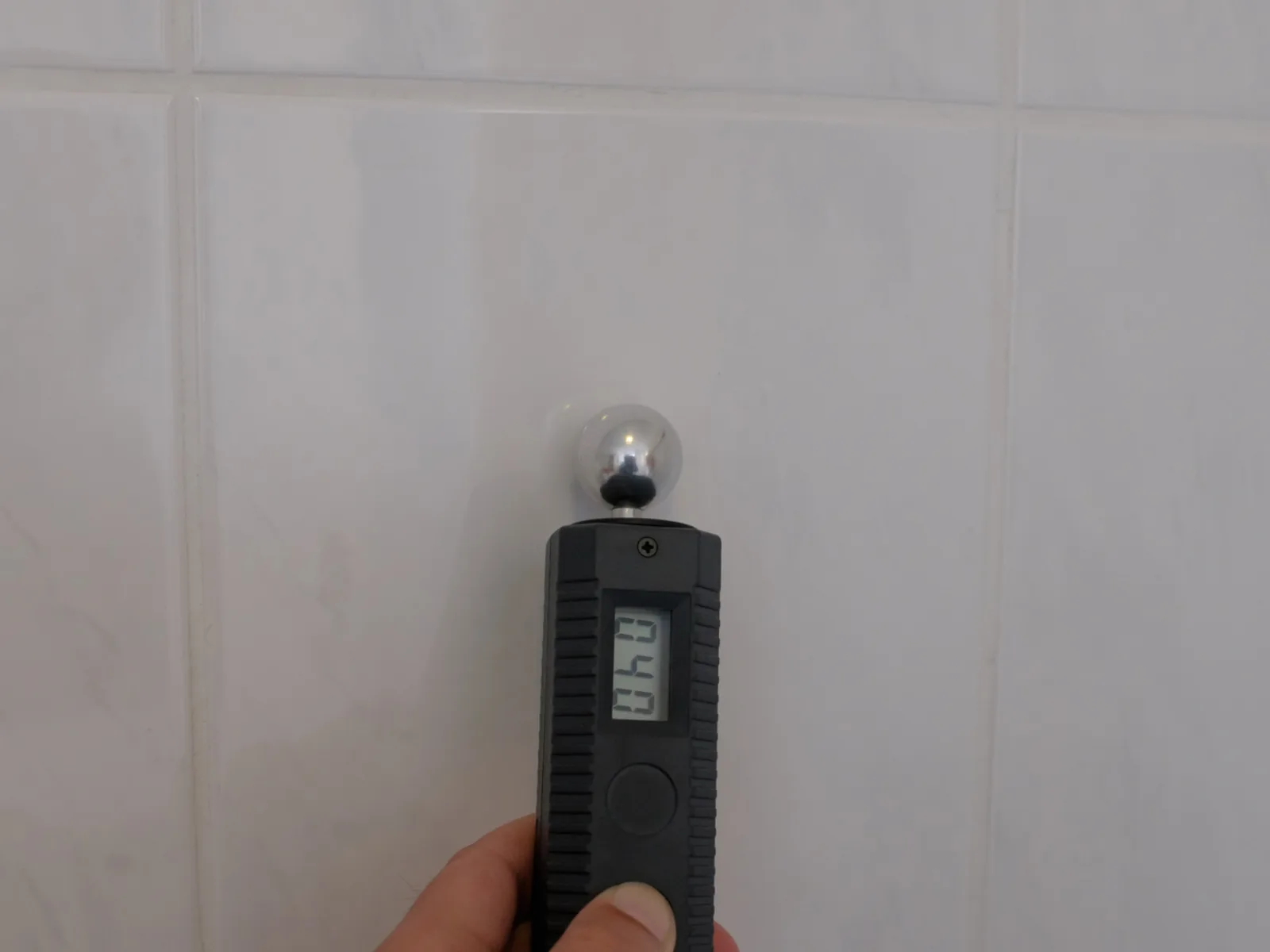
Find out exactly what is causing the damp, what it takes to fix it, and what it costs, in writing, at a fixed price, with no charge for the visit and no obligation to proceed.
Damp surveys & diagnosis in Stanmore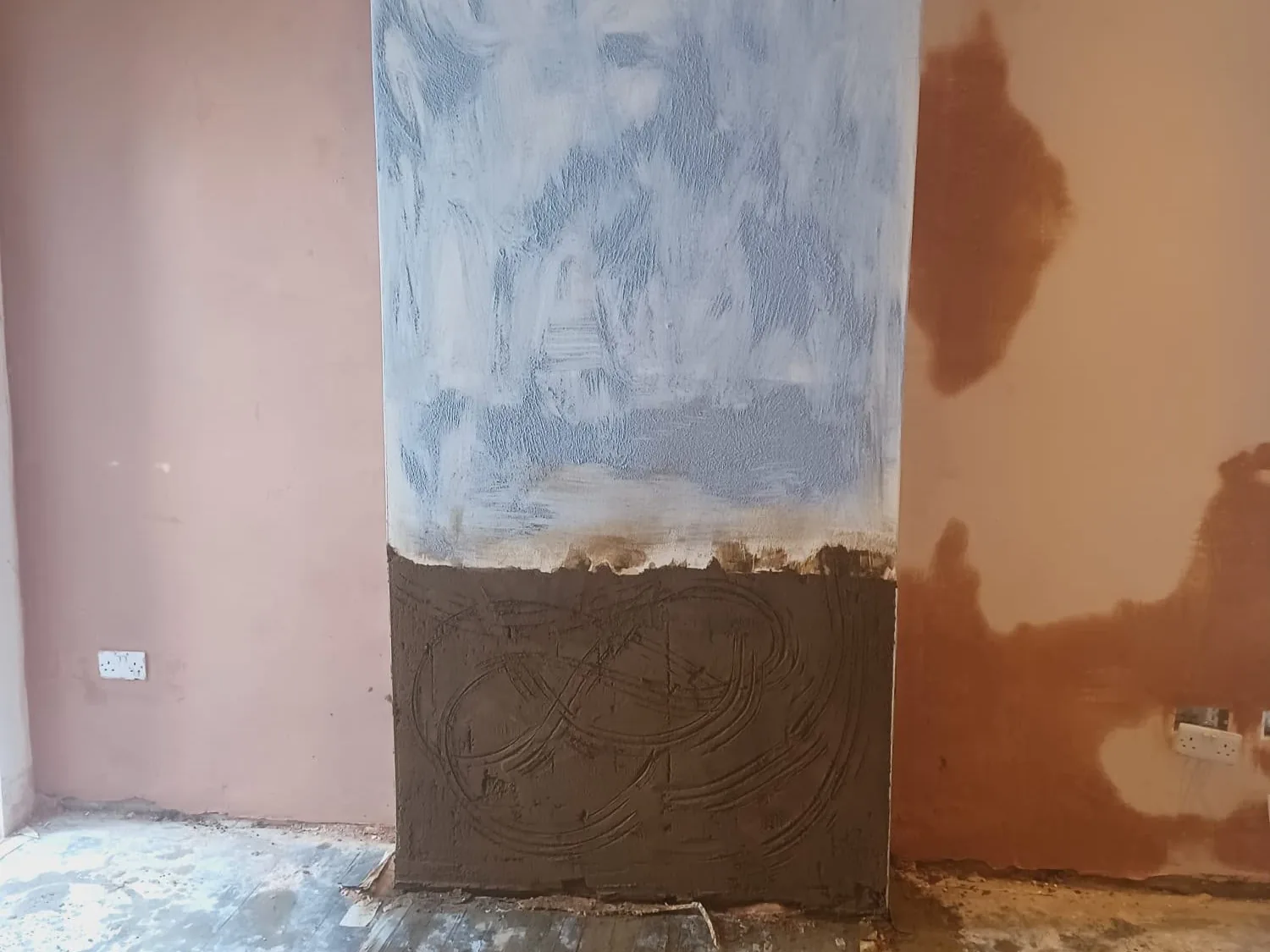
Below-ground rooms need a waterproofing system, not a coat of damp-seal paint. Membrane and cementitious tanking specified to suit the structure, installed as an approved Sovereign and Wykamol contractor, with a free survey and a fixed price.
Structural waterproofing & tanking in Stanmore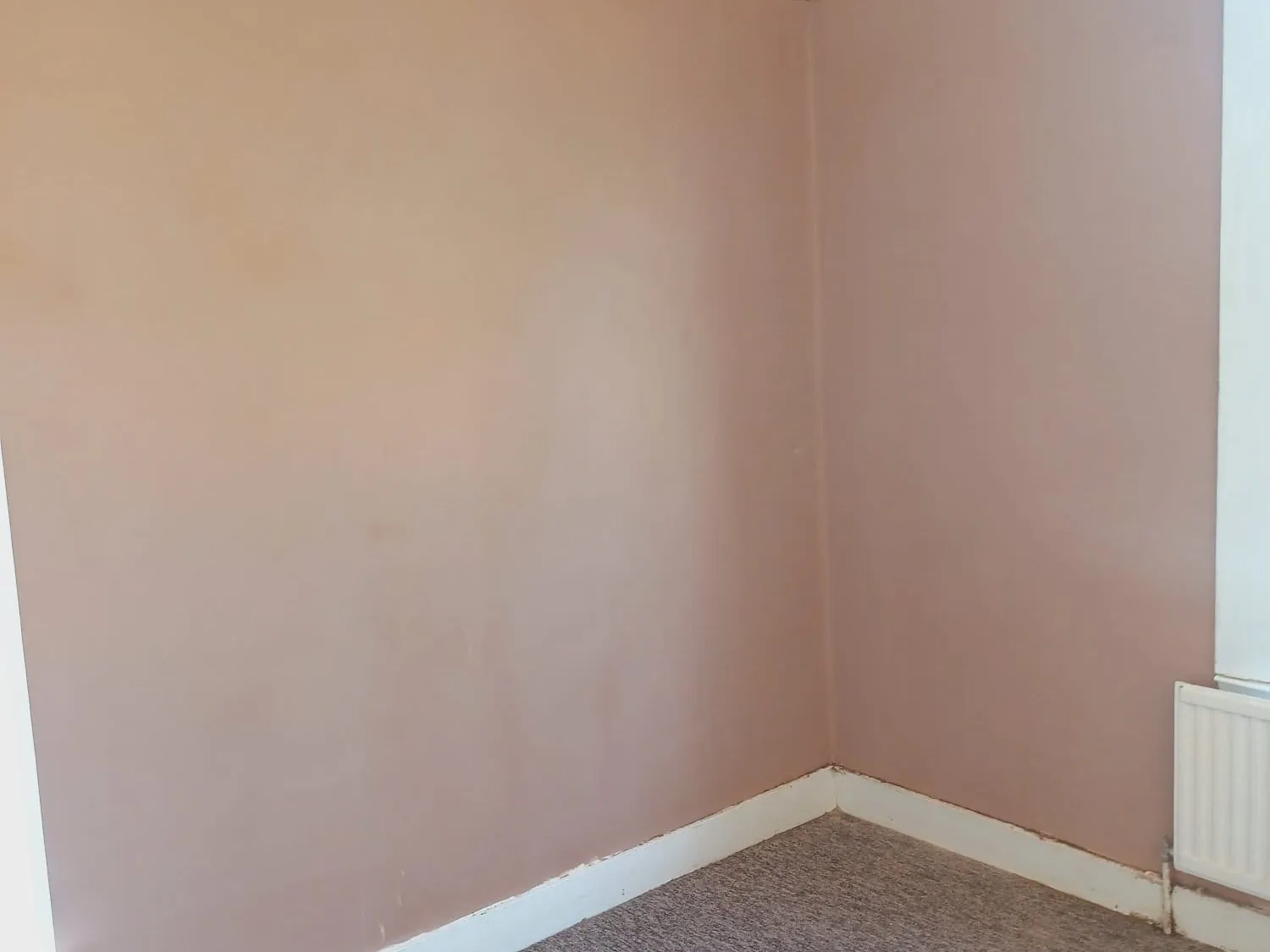
The replaster is half of any damp repair. We remove contaminated plaster, apply the specified salt-retardant system and leave a flat, decoration-ready finish, as part of a fixed price, by the same contractor that treated the wall.
Plastering in Stanmore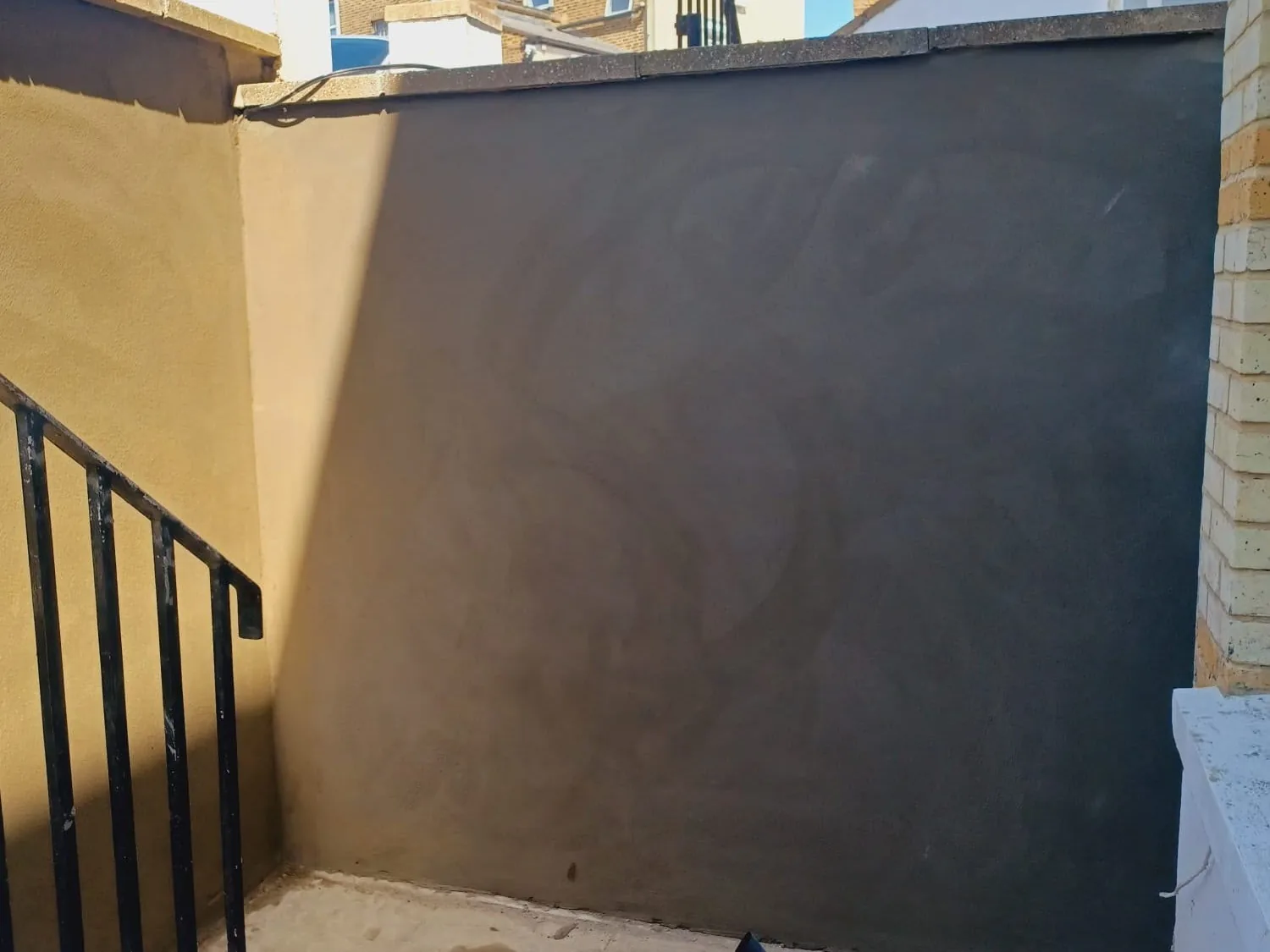
Cracked, hollow or blown render holds water against your masonry. We identify why it failed, repair or renew it with a system suited to the substrate, and fix the damp it was causing inside.
Rendering in Stanmore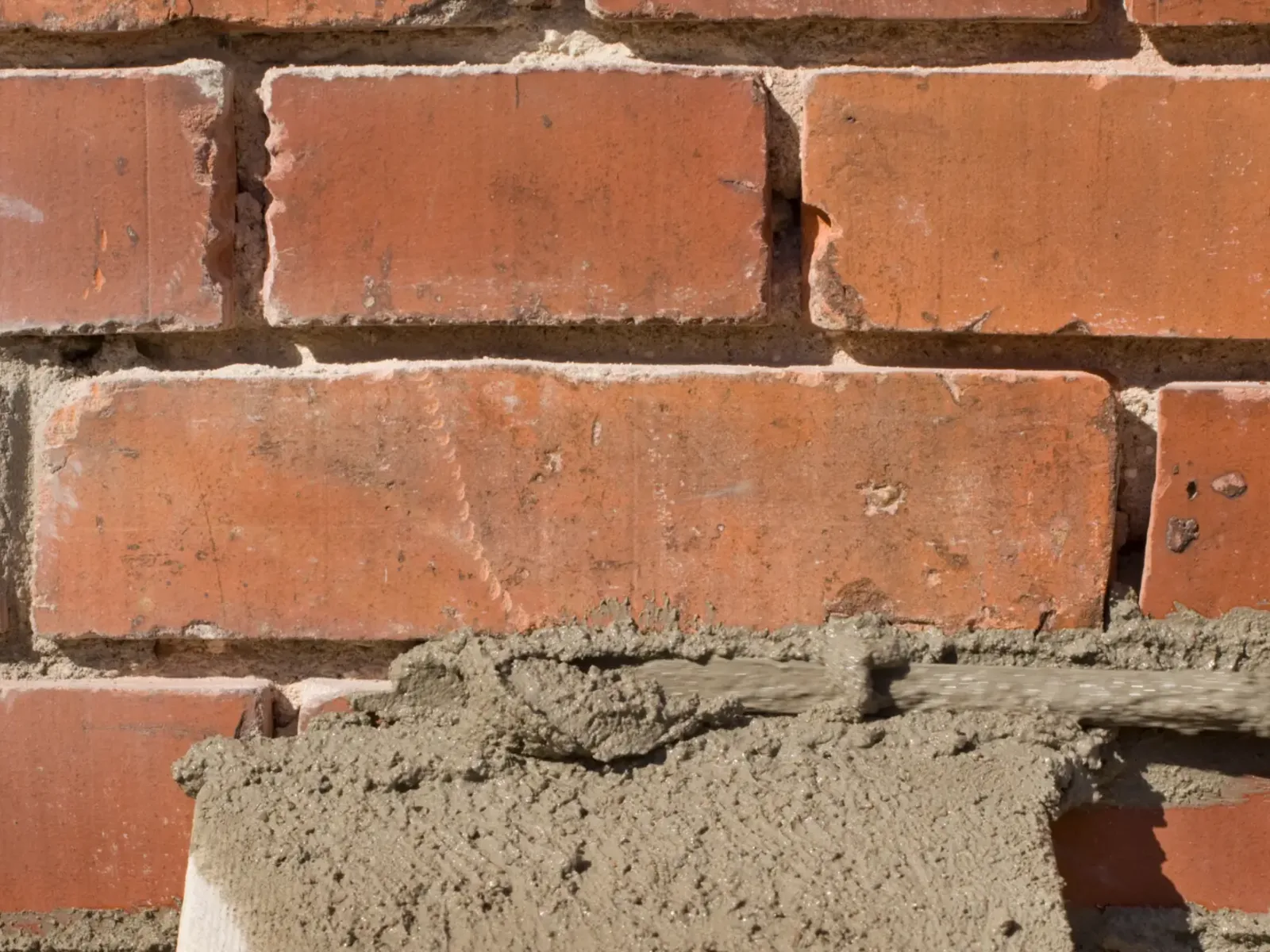
Open joints and spalled brick faces are the most common route for penetrating damp. We cut out properly, repoint in a mortar matched to your brick, and replace masonry that has broken down.
Brickworks & repointing in Stanmore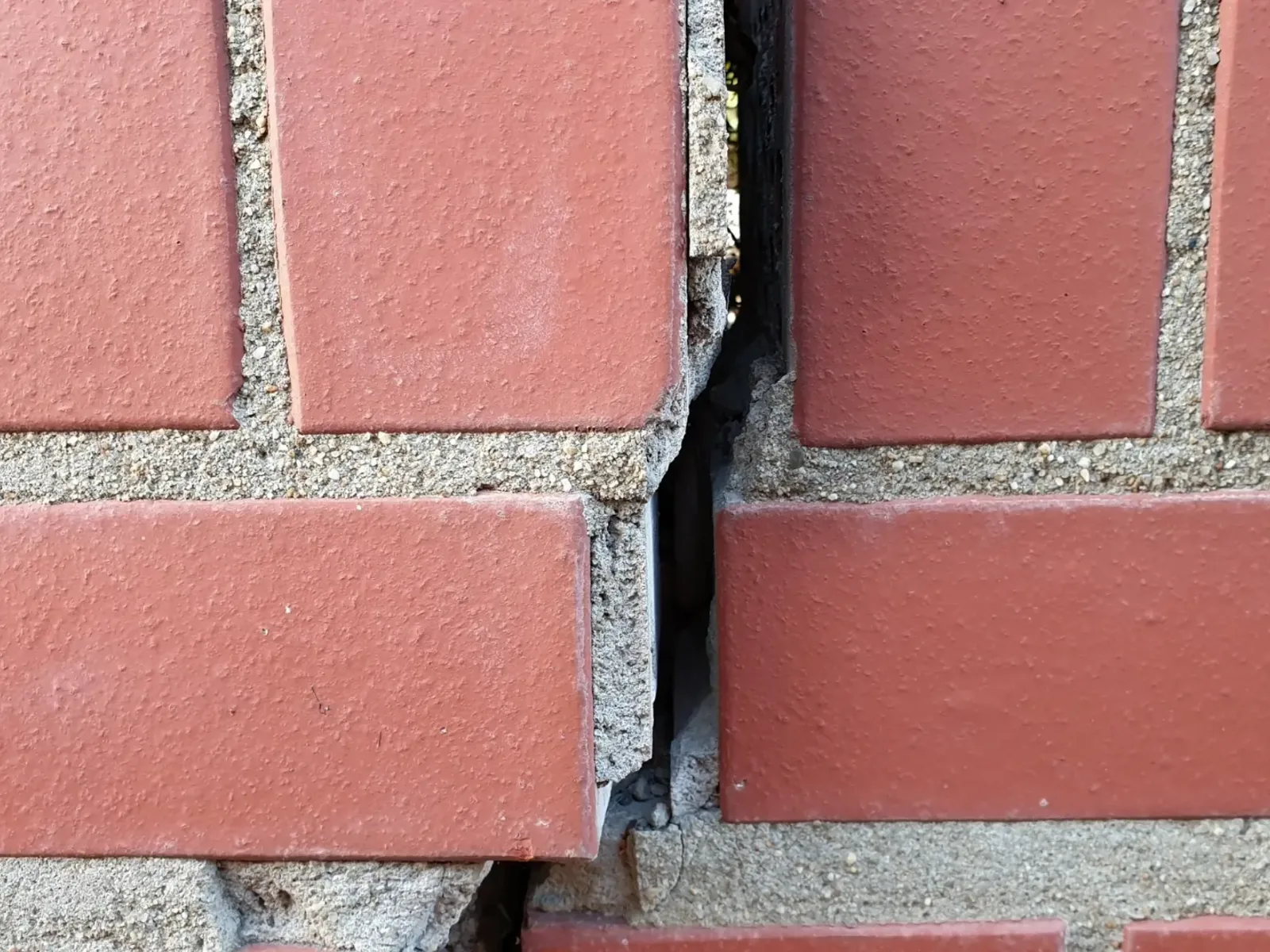
Helical stainless bars bonded into the bed joints tie cracked brickwork back into one structure, a repair carried out from the outside, without rebuilding the wall, and finished so the crack disappears.
Brick stitching in Stanmore
Damp repairs rarely stop at the damp. We carry out the associated building work: masonry, render, plaster, joinery repairs and making good, so the job finishes with one contractor accountable for all of it.
General building in Stanmore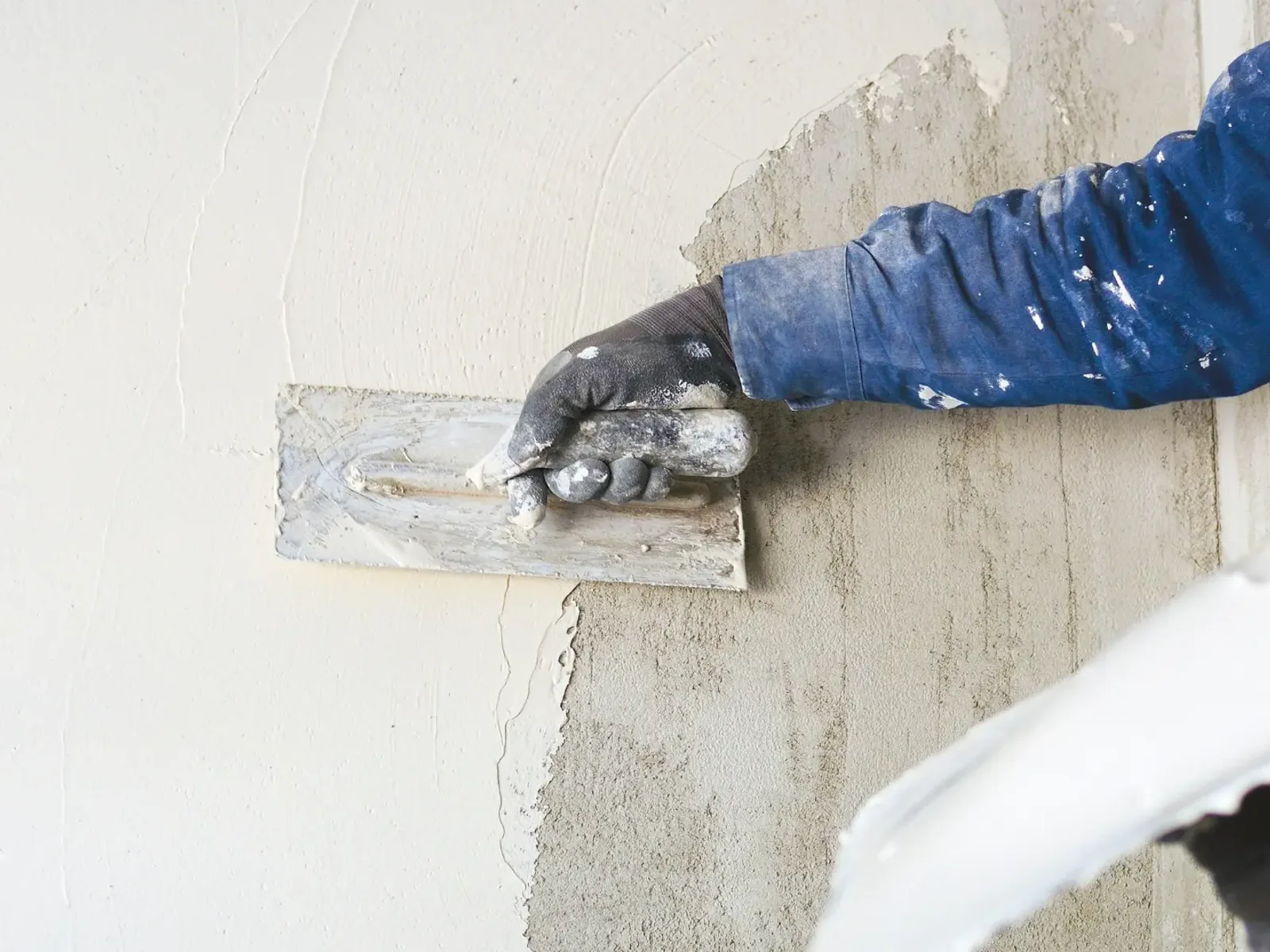
Treatment stops the damp; remedial work makes the room liveable again. Plaster, joinery, floors, decoration preparation and making good, completed by the contractor that did the specialist work, at a fixed price.
Small refurbishment & remedial works in StanmoreWhy choose us
On sloping Stanmore sites the source of damp is often what is happening outside and below the property, retaining walls, drainage and ground levels, as much as the wall itself.
Substantial 1930s and modern detached houses have more elevations, more junctions and more roof detail than a standard semi, all of which are checked as part of the survey.
10-year company workmanship guarantee plus a separate 10-year QANW insurance-backed guarantee on damp treatment.
Accredited tanking and cavity drain membrane systems specified for below-ground rooms and retaining structures on hillside plots.
Accredited products and systems installed to the manufacturer's specification.
Free survey and written fixed-price quotation, 50% deposit and 50% on completion by bank transfer, £2,000,000 public liability insurance held.
Local damp problems
Stanmore's damp problems are shaped heavily by topography. On level plots in Belmont and Canons Park the usual interwar faults apply, bridged cavities, ageing damp proof courses and render failure. On the sloping ground around Stanmore Hill and Harrow Weald, retaining structures, ground water pressure and below-ground rooms move to the front of the list.
Integral garages, converted or original, and flat-roofed extensions common to this style of larger detached house add further points where water can get in that a straightforward terrace would not have.
On sloping Stanmore Hill plots, retaining walls without adequate drainage behind them let water build up and push through to rooms on the lower side.
Rooms cut into rising ground take water under real pressure, and a surface damp seal is not sufficient once the space is used day to day.
Debris left in the cavity during construction, or later raised ground levels around large plots, bridge the damp proof course and let moisture cross to the inner leaf.
Garages built into the main structure and later converted to living space often have a slab with no damp proof membrane and walls with no effective DPC.
Flat-roofed rear and side extensions, common on larger Stanmore houses, are a frequent source of penetrating damp where roof coverings, upstands or abutment flashings have failed.
The smaller, older properties along Stanmore Hill can have solid walls and ageing or absent damp proof courses, producing classic rising damp separate from the issues seen in the larger surrounding houses.
Our process
We inspect the property, identify the actual cause of the damp and explain it in plain terms. No charge, no obligation.
A clear fixed price for the specified works, built around your property, never a day rate.
Accredited Sovereign and Wykamol systems installed, walls replastered and the area made good. 50% deposit, 50% on completion by bank transfer.
Treatment checked for continuity, plaster left flat and decoration-ready, and the area cleaned down.
A 10-year company workmanship guarantee plus a 10-year QANW insurance-backed guarantee on damp treatment.
In detail
Stanmore Hill drops away sharply, and a lot of the plots either side are terraced with retaining walls to create usable garden and, in some cases, habitable space below ground level. A retaining wall without a working drainage path behind it becomes saturated over time, and that water finds its way through to the room on the other side.
Correcting this properly usually means addressing drainage at the wall, a drainage channel or land drain taking water away rather than letting it build up, alongside any waterproofing to the wall face itself. Treating only the inside face of a retaining wall without dealing with the water behind it tends to be a short-lived fix.
We survey the external ground conditions as carefully as the internal symptoms on these sites, because on a hillside plot the two are directly connected.
Larger Stanmore properties, both the established 1930s houses and newer detached homes built to a bigger footprint, increasingly include basement or lower-ground floor accommodation, sometimes original, sometimes added during a major renovation. On sloping ground these rooms can be effectively below the water table on one side, so they need to be designed as structural waterproofing rather than treated as an afterthought.
We specify cementitious tanking bonded to sound masonry, or a cavity drain membrane system with perimeter drainage and a sump and pump where gravity discharge is not possible, detailing floor-to-wall junctions, steps and service penetrations properly since that is where these systems are most likely to fail if rushed.
Ventilation and internal moisture levels are also part of the specification. A below-ground room used as a gym, cinema room or additional bedroom generates more moisture than most cellars were ever designed to handle.
Integral garages are common in Stanmore's larger detached houses, and where they have been converted to habitable rooms the original slab and wall construction rarely meet the standard needed. We survey for a floor damp proof membrane, wall damp proof course and, where necessary, tanking to the lower part of the wall before specifying a fix.
Flat roofs on rear and side extensions are another regular source of penetrating damp in this area, particularly where upstands, abutment flashings or roof coverings have aged or were poorly detailed originally. Where the roof covering itself is the issue we work alongside roofing repairs so the underlying wall and ceiling damage is not simply replastered over a fault that will return.
Mixed in among the larger detached houses, particularly closer to the top and bottom of Stanmore Hill, are smaller, older cottages and period houses. These are typically solid-walled, without a cavity, and where a damp proof course exists at all it is often an ageing slate course well past its working life.
Rising damp in these properties follows the familiar pattern, a tide mark at a consistent height, salt bloom and hollow, blown plaster, and is treated with an injected chemical damp proof course using an accredited Sovereign or Wykamol system, followed by removal of salt-contaminated plaster and salt-retardant replastering.
From Harrow we cover Stanmore, Belmont, Canons Park, Harrow Weald and the Bushey Heath fringe, along with the rest of Middlesex, Brent, Edgware, Wembley, Pinner, London and West London, and further out to Watford, Slough, Buckinghamshire, High Wycombe and Surrey.
Calls are taken Monday to Friday 8am to 8pm and Saturday 8am to 1pm, and we are straightforward about timescales where a job involves structural waterproofing rather than a standard damp proof course.
Questions
Yes, along with Harrow Weald and the Bushey Heath fringe, as part of our wider Middlesex coverage from Harrow.
Usually saturated ground behind the wall with no working drainage path. We survey the ground conditions as well as the wall before specifying a fix.
Yes, using cementitious tanking or a cavity drain membrane system with drainage and a sump and pump where needed, specified after assessing the ground conditions.
Usually yes, typically with a floor damp proof membrane, a wall damp proof course and tanking to the lower wall where required. We confirm the scope after surveying it.
Yes, we diagnose whether the fault is the roof covering, the flashings or the wall below, and can work alongside roofing repairs where the covering itself needs attention.
It depends on the construction, whether structural waterproofing is involved, wall length and access, so there is no set price. The survey and written fixed-price quotation are free.
Yes, they are typically solid-walled without a cavity, so rising damp is treated with an injected chemical damp proof course and salt-retardant replastering rather than a bridging fix.
Damp treatment carries a 10-year company workmanship guarantee plus a separate 10-year QANW insurance-backed guarantee. Building works carry a 6-month workmanship guarantee.
Public liability insurance is held to £2,000,000.
Yes, and so is the written fixed-price quotation, with no obligation to proceed.
Free survey
Whether it is a retaining wall, a below-ground room or a converted garage, send the postcode and we will arrange a survey and a written fixed price.
Nearby areas
We are registered and based in Harrow, so this is where we know the streets, the housing stock and the recurring faults best. Free survey, honest diagnosis, fixed price and ten-year guarantees on damp treatment.
View areaFrom the timber-framed village core to 1930s mock-Tudor semis and detached houses, Pinner damp has particular causes. Free survey, written fixed price, ten-year guarantees on treatment.
View areaMetroland semis, pebbledash and tile-hung elevations, side alleys and clay ground movement: we know the Edgware pattern well. Free survey and diagnosis, a written fixed price, and ten-year guarantees on damp treatment.
View areaWembley's dense interwar streets have seen decades of extending, converting and letting. We survey free, work out what has actually changed and quote a fixed price with ten-year guarantees on damp treatment.
View areaWe are based in Harrow, so Middlesex is home ground. Interwar semis, period terraces and modern extensions, free survey, honest diagnosis, fixed price and ten-year guarantees on damp treatment.
View area