Frost damage and spalling
Wet brick faces and soft mortar break apart in freeze-thaw cycles, turning a repointing job into brick replacement.

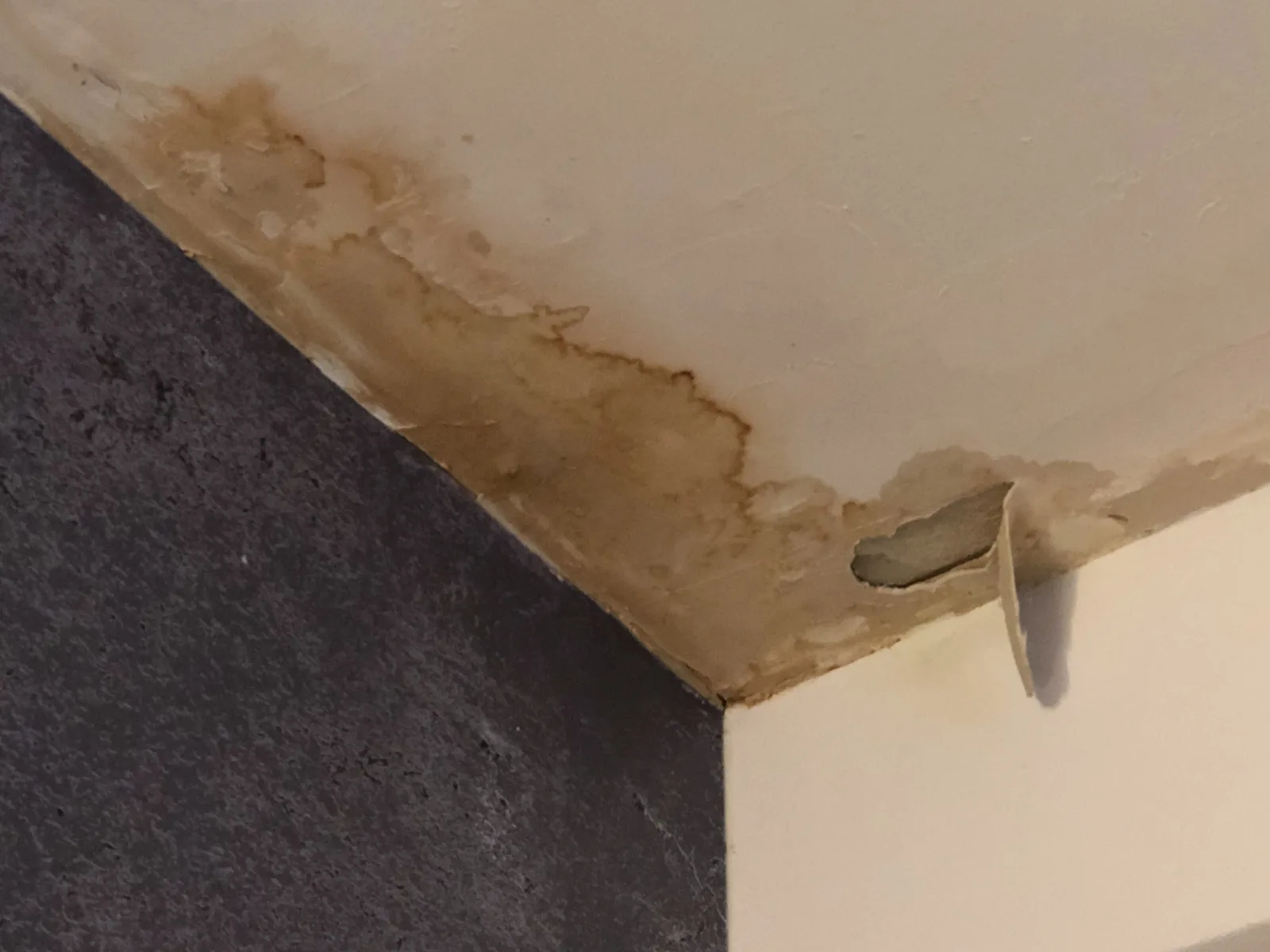
Damp proofing & remedial treatment specialists
Damp that worsens after rain is coming in from somewhere. We find the route: pointing, render, sills, gutters or roof detail; correct it, then repair the wall inside. Free survey, fixed price, no guesswork.
Free survey and diagnosis · Sovereign & Wykamol approved contractor · 10-year guarantees on damp treatment
10 years
Workmanship guarantee on damp treatment
10 years
QANW insurance-backed guarantee
£0
Survey, diagnosis and fixed-price quotation
Mon–Sat
8am–8pm weekdays, 8am–1pm Saturday
Service overview
Penetrating damp is water crossing the external envelope and reaching the inside face of a wall or ceiling. Unlike rising damp it has no fixed height: it appears as isolated patches, staining around windows, damp high on a gable, a brown ring on a ceiling, or wallpaper lifting on one wall only. The giveaway is timing, it darkens during and after heavy or driven rain and fades in dry spells.
The treatment is not a coating. It is a repair to whatever is admitting the water, followed by making good the damage inside. That might mean repointing eroded mortar joints, repairing or renewing render, resealing around a window or sill, correcting a leaking gutter or downpipe, addressing roof and flashing details, or applying a breathable façade cream where a solid wall is saturating through.
This work suits solid-wall properties on exposed elevations, houses where cavity walls have been bridged by debris or wall ties, flats where the ingress is above or beside the affected room, and any property where a previous 'damp proofing' visit treated the inside and ignored the outside.
It needs a specialist because the wet patch is rarely below the defect. Water tracks along mortar beds, joists and lintels before it shows, so finding the source takes a systematic external inspection rather than a moisture meter alone.
Properties with damp patches that appear or worsen after rain, staining around openings, or wet high-level walls and ceilings.
As soon as staining appears. Water ingress accelerates once mortar, render or timber has started to break down.
Internal treatment alone traps the water. The defect must be located and corrected, then the internal finish repaired properly.
What happens if it is left
Water getting into masonry has three ways of making the bill grow: it freezes, it rots, and it corrodes. Saturated brick and mortar spall in frost, embedded timber lintels and joist ends decay, and steel or iron fixings and wall ties rust and expand, which cracks the masonry around them and lets in more water again.
The expensive mistakes are consistent: painting over the stain, applying a waterproof coating to the inside face so moisture is trapped in the wall, or replastering before the ingress has been stopped. All three buy a few dry months and leave the fabric deteriorating behind them.
Wet brick faces and soft mortar break apart in freeze-thaw cycles, turning a repointing job into brick replacement.
Lintels, wall plates, joist ends and battens in a permanently wet wall develop wet rot, which is structural work, not decoration.
Corroding ties and embedded steel expand as they rust, cracking joints and opening new water paths.
Plaster debonds, wallpaper lifts, coving parts from the ceiling and paint blisters; repeatedly, until the ingress stops.
A permanently damp wall surface supports mould growth, with the health and tenancy-compliance consequences that brings.
Sealing the inside face with tanking slurry or 'damp seal' paint. The water keeps arriving and finds the next weakest point instead.
Our process
Free survey covering the internal pattern and the external elevation above and around it: pointing, render, sills, copings, flashings, gutters, downpipes and roof edges.
We identify the actual entry route and rule out rising damp and condensation, then explain the evidence, not a guess dressed up as a diagnosis.
The cause is repaired: repointing, render repair or renewal, brickwork repair, sealing of openings, rainwater goods or roof-detail work as specified.
Affected plaster removed and rebuilt where needed, walls monitored for response after weather, and the room left decoration-ready.
Balance on completion, with the 10-year workmanship and 10-year QANW insurance-backed guarantees issued on damp treatment work.
What you get
Water is kept out at the envelope rather than sealed in behind a coating, so the wall can dry and stay dry.
External repointing, render and brickwork plus internal plastering handled by the same business, no gap between trades.
Stopping ingress early protects lintels, joist ends, wall ties and brick faces from the damage that makes repairs structural.
A dry wall insulates far better than a saturated one, so rooms warm up faster and hold heat.
You see exactly which defects are being corrected and what it costs before work begins. Never a day rate.
Damp treatment carries a 10-year company workmanship guarantee and a 10-year QANW insurance-backed guarantee.
In detail
Nearly all penetrating damp comes from a short list of defects. Knowing the list, and checking all of it rather than the first candidate, is what separates a repair from a redecoration.
Mortar joints are the sacrificial part of a wall, and on exposed London elevations they erode until rain sits in open joints and tracks inwards. Repointing puts that right, but only with a mix appropriate to the brick: a hard cement-rich mortar on soft Victorian stock brick forces moisture to escape through the brick face instead of the joint, and the faces then spall.
We cut out defective joints to a proper depth rather than skimming over them, match the mix and joint profile to the existing wall, and deal with the whole affected area so water is not simply diverted a metre sideways.
Cracked, hollow or blown render is worse than no render, because it collects water behind the face and holds it against the masonry. Tapping the elevation finds the debonded areas. Depending on extent, the repair is a cut-out-and-patch, a full re-render, or a change of system where the original mix was unsuitable for the substrate.
Where a solid wall is simply saturating through under driven rain, a breathable water-repellent façade cream can be specified. It reduces absorption while still letting the wall release vapour, which is the opposite of a sealing paint.
Windows and doors concentrate water. Perished mastic, a missing or reversed drip on a sill, a cracked cill, failed lead trays and open joints under copings and parapets all put water directly into the reveal, which is why staining so often frames an opening.
Repairs here are small in scale and disproportionately effective: renewing seals, reinstating throating or drip details, bedding loose copings and repairing defective sills.
A split downpipe, blocked gutter, failed gutter joint or overflowing hopper will soak a wall faster than any amount of driven rain, and will do it in a narrow vertical band that is easy to identify. Chimney flashings, abutments, valleys and flat-roof upstands cause the same pattern at high level and on ceilings.
We inspect and address these as part of the diagnosis, because there is no sense in repointing a wall that is being hosed by a broken pipe.
In cavity-walled properties, water crossing the cavity is usually mechanical: mortar droppings on ties, debris at the base, insulation slumped or badly fitted, or a tie sloping the wrong way. The pattern is often a discrete damp spot rather than a spread.
Where masonry has cracked because ties or embedded steel are corroding, the brickwork repair and any helical stitching are carried out alongside the damp work so the wall is sound as well as dry.
In houses and flats the priority is normally minimum disruption and a clean decoration-ready finish. In commercial premises: shops, offices, workshops; the same technical repairs are staged around trading hours, stock and access equipment, and high-level work on parapets and flat-roof details features more often.
Either way the quotation is a fixed price for a defined scope, paid 50% deposit and 50% on completion by bank transfer.
Carried out across Harrow, Wembley, Pinner, Stanmore, Edgware, Ealing, London, Middlesex, Watford, Buckinghamshire, Slough, Brent, Surrey, High Wycombe, West London, see the full list of areas covered.
Questions
It depends entirely on which defect is admitting the water and how much internal repair follows, a mastic and gutter repair is a different job from re-rendering a gable. The free survey gives you a written fixed price for the defined scope, with no obligation.
Most causes are identified at the survey visit, because the external inspection normally shows the defect. Occasionally a wall needs to be observed through wet weather to confirm the route, and we will say so rather than guess.
Small repairs such as resealing openings or a patch repoint are usually a day or two. Full re-rendering or extensive brickwork with internal replastering takes longer, and the programme is set out in your quotation.
Damp treatment carries a 10-year company workmanship guarantee and a 10-year QANW insurance-backed guarantee. General building elements of the work carry a 6-month workmanship guarantee.
The wall has to dry out after the ingress stops, and that takes weeks rather than days depending on wall thickness and ventilation. We advise when the wall is ready for plastering and decoration.
No, and we would not recommend anyone did. Sealing the internal face traps water in the masonry and moves the problem rather than solving it. The exception is below-ground structures, where structural waterproofing is the correct solution.
We take calls Monday to Friday 8am to 8pm and Saturday 8am to 1pm and prioritise active water ingress. Call and describe what is happening and how fast.
Yes: roof-level details are one of the most common causes of penetrating damp, so inspecting and repairing them is part of the service. Access arrangements are included in the fixed price.
London, Middlesex, Watford, Buckinghamshire, Slough, Brent, Surrey, High Wycombe and West London.
Penetrating damp follows the weather and appears as isolated patches at any height; rising damp holds a consistent height with salting; condensation concentrates on cold surfaces, corners and behind furniture. The survey distinguishes them before anything is quoted.
Free survey
The timing and position of the staining is usually enough for us to know where to look. Book a free survey and we will find the route the water is taking and quote a fixed price to close it.
Related services
Open joints and spalled brick faces are the most common route for penetrating damp. We cut out properly, repoint in a mortar matched to your brick, and replace masonry that has broken down.
Brickworks & repointing in London & MiddlesexCracked, hollow or blown render holds water against your masonry. We identify why it failed, repair or renew it with a system suited to the substrate, and fix the damp it was causing inside.
Rendering in London & MiddlesexFind out exactly what is causing the damp, what it takes to fix it, and what it costs, in writing, at a fixed price, with no charge for the visit and no obligation to proceed.
Damp surveys & diagnosis in London & Middlesex